Blockchain traceability for transparency and trust
How do you prove the diamond you buy your fiancée is genuine and ethically sourced? Tracr brings verifiable transparency and trust to the supply chain through blockchain traceability.
Objectives & outcomes
Objectives
- Introduce a scalable design system to a legacy platform
- Shift from surface-level restyling to meaningful, incremental redesign
- Prove design value to stakeholders with every delivery
- Improve design-to-development efficiency
Outcomes
- ~50% reduction in design and testing time for redesigned flows
- 3x faster design-to-dev handoff after token integration
- Platform architecture simplified from ten nav sections to three, with more functionality than the original
- Strategy shifted from visual restyle to incremental platform redesign with sustained stakeholder buy-in
Building a design foundation for supply chain transparency
How do you redesign a complex platform when a full rewrite isn't an option, and every change needs to prove its value to stakeholders immediately?
Key contributions
Product designer leading design system, product strategy, and platform UX. I proposed using the design system as a delivery vehicle, redesigning the platform incrementally, starting with changes that unlocked both UX and engineering value at the same time.
- Design system
Introduced Tracr's first design system, standardising UI patterns and cutting design and development time for new flows significantly. - Platform architecture
Redesigned navigation and platform structure to improve discoverability and support future scale. - Core workflows
Created reusable interaction patterns for key features, reducing redesign effort and speeding up delivery across teams.
Building systems, not just screens
"He’s someone you can rely on to solve complex problems thoughtfully and systematically. I would strongly recommend Przemek to any team looking for a technically strong, systems-minded product designer."
Matt Bindoff
Lead Engineer at Tracr
Reframing the problem
Problem is not always what it seems.
Early on, it became clear that
- A pure visual restyle would not deliver meaningful business value.
- A Design System alone wouldn’t fix usability or dev painEvery change needed clear functional and usability improvements
- Value had to be visible immediately to maintain stakeholder support
I proposed
- Using the Design System as a delivery vehicle
- Redesigning the platform incrementally, not via a risky rewrite
- Starting with changes that unlocked both UX and engineering value.
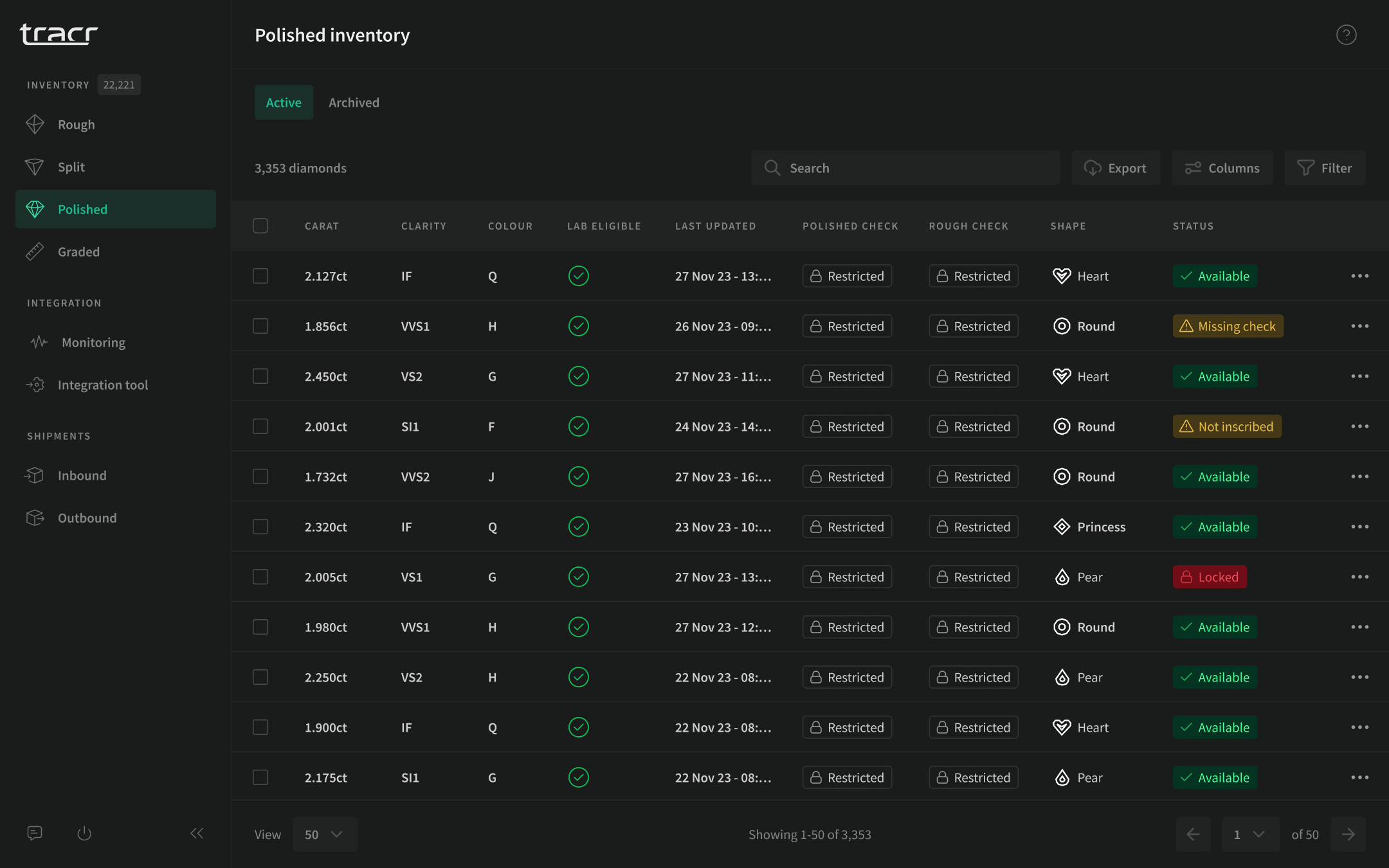
Progressive platform update
We rolled out the new shell section by section, upgrading the platform piece by piece while keeping it live. Users got continuous improvements. Engineering avoided a risky rewrite. Stakeholders saw value landing every sprint.
- Legacy platform
The starting point. Fragmented navigation, inconsistent patterns, years of bolted-on features. - North star
Section by section, the platform transformed. Cleaner architecture, unified design system, new features landing alongside improvements to existing ones.
Simplifying what was never complex
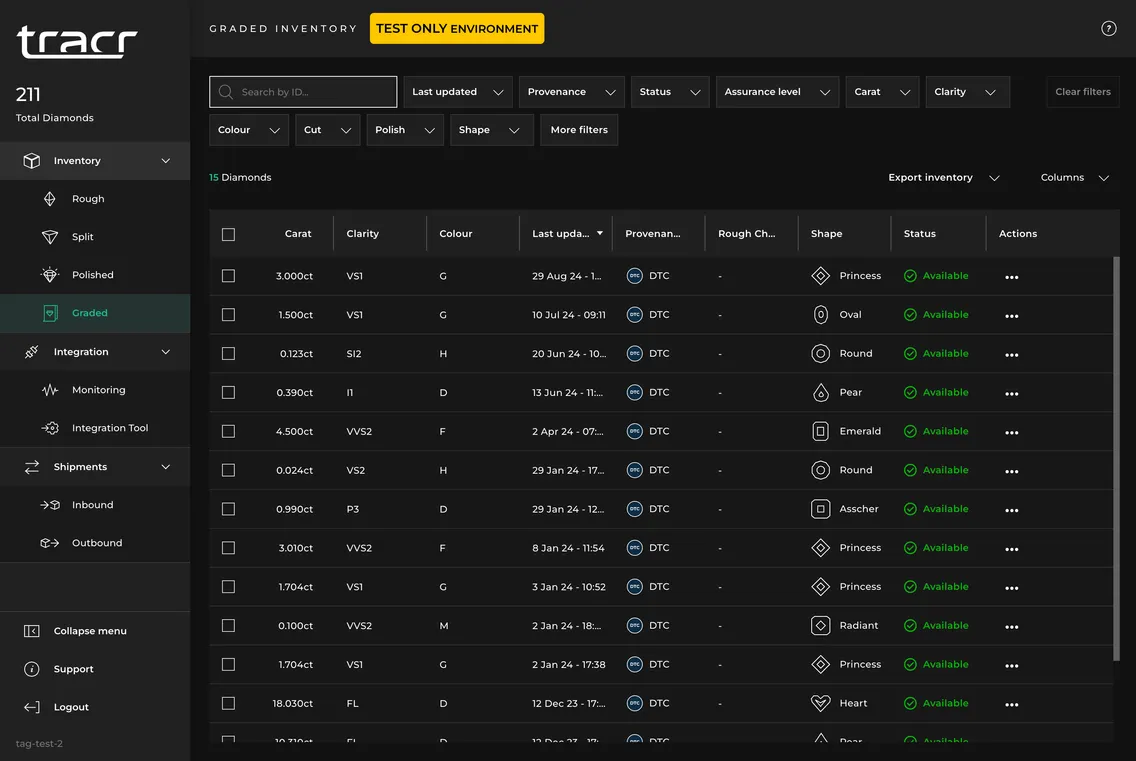
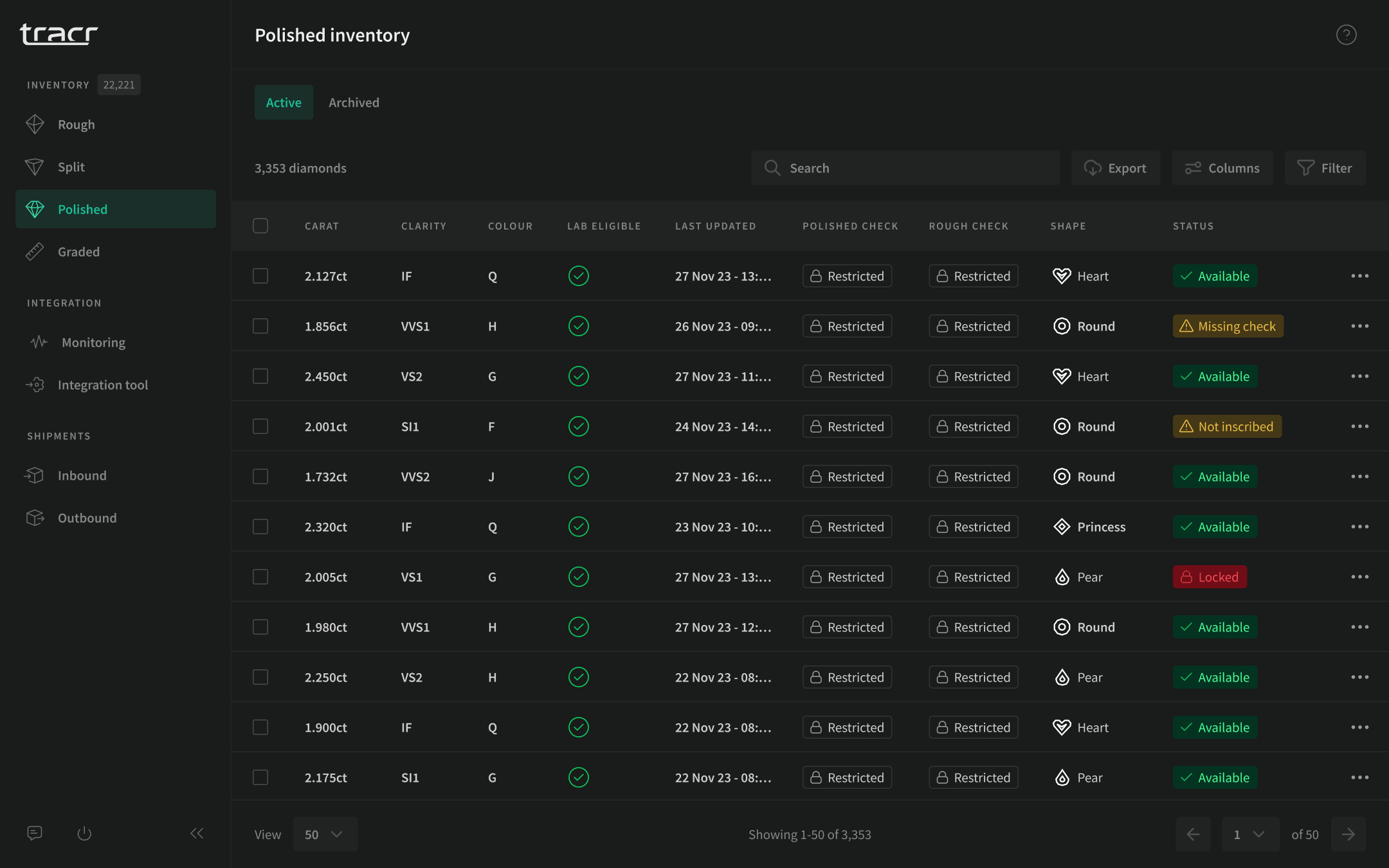
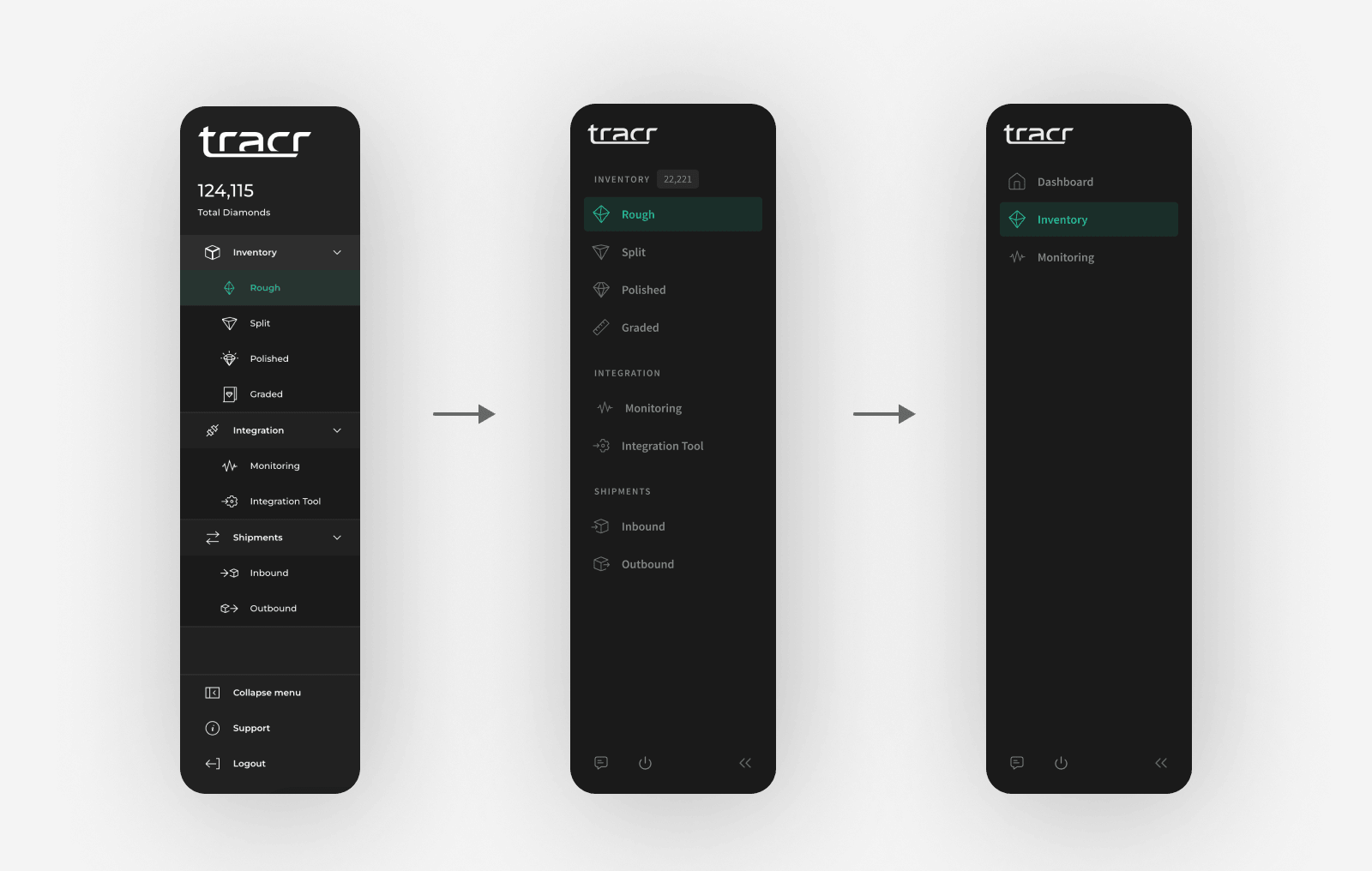
The platform had grown by bolting on sections as features arrived, Shipments here, Integration there, Monitoring somewhere else. But every action on the platform relates to a diamond. Once you see that, the architecture simplifies itself.
- Old: Feature creep as architecture
Everything bolted on as it arrived. Each new requirement became a new section. The nav reflected how features were requested, not how users think. - New Shell: Polished, not rethough
Design system applied, navigation cleaned up, immediate value delivered. The underlying structure stayed the same, cleaner on the surface, still tangled underneath - North Star: Simpler and more powerful
I stepped back and asked: what if the diamond is the only object that matters? That reframe collapsed the entire architecture. Three nav items instead of ten, and more features than the original ever had.
I was brought in for the design system. Reframing the problem was where the real value landed.
A reusable drawer pattern
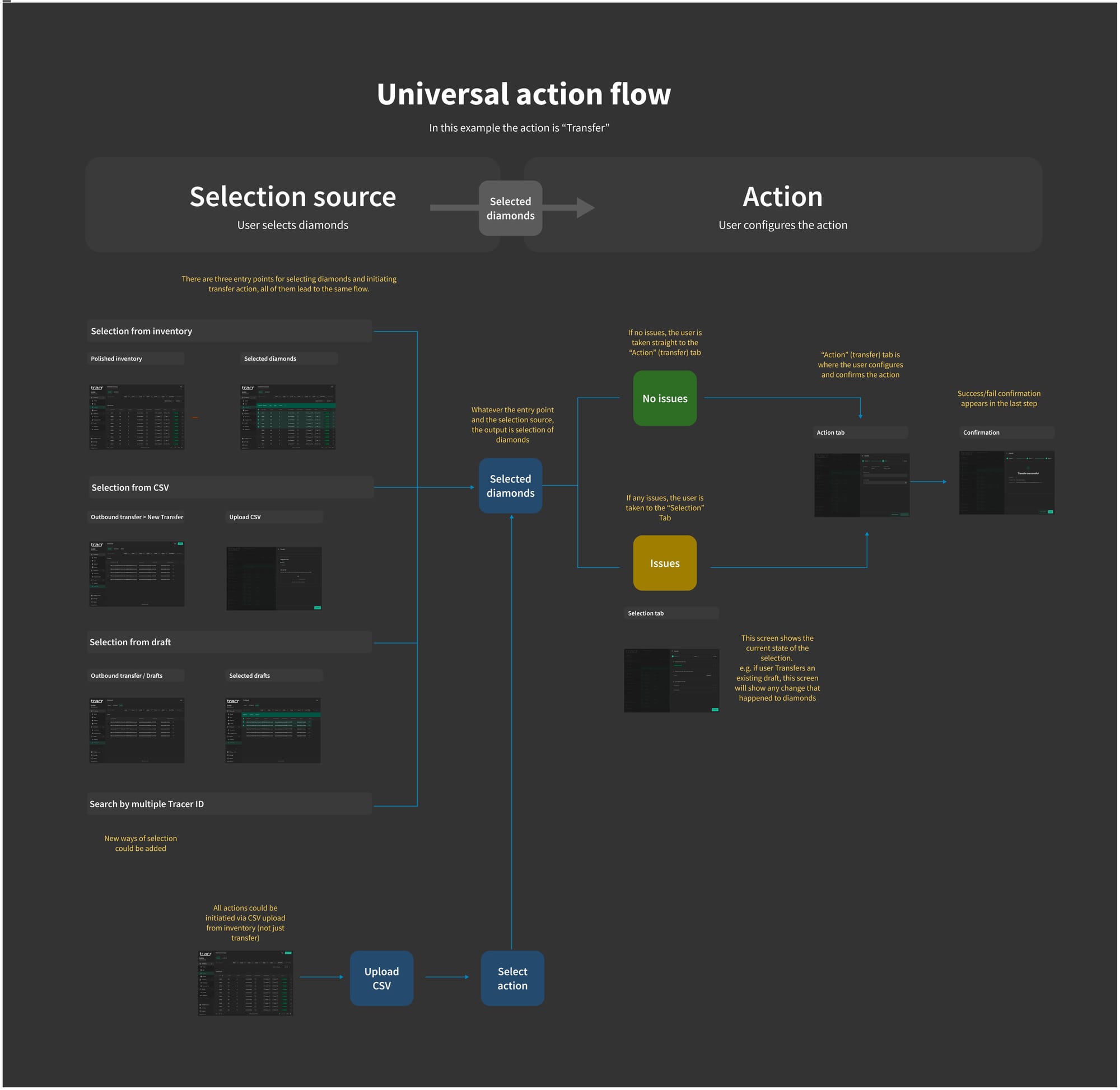
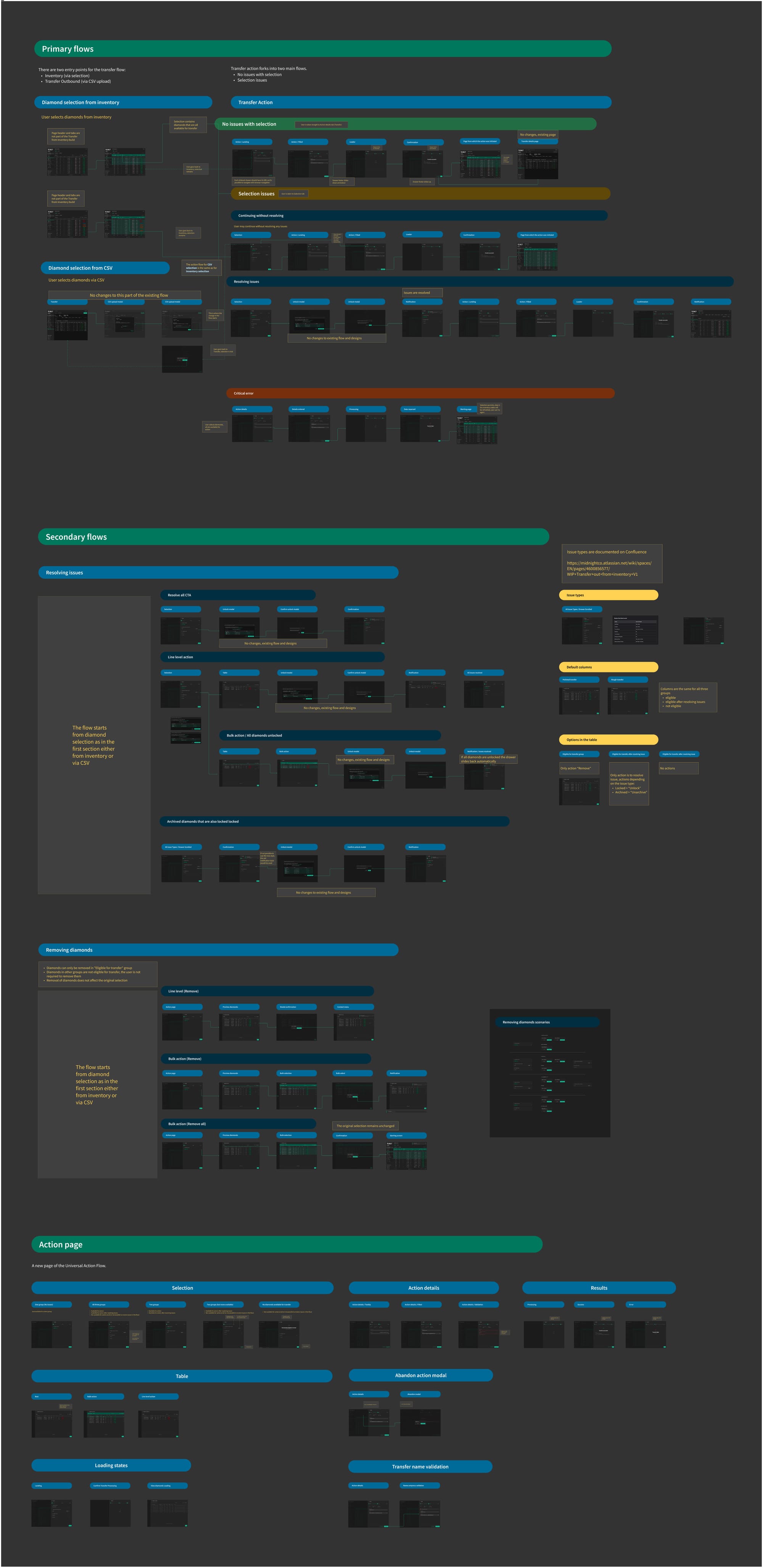
One interaction pattern, many problems solved. The drawer became a flexible container for details, actions, and contextual content across the platform bringing consistency where there was fragmentation, and room to scale as new features landed.
Key learnings
- Sometimes the design system is the delivery strategy
Tokens and components aren't just tidier CSS. They became the mechanism for rolling out platform-wide change without a full rewrite. Framing design work this way changed how engineering and leadership saw its value. - The architecture was the real problem
I was brought in for a design system. The biggest impact came from stepping back and asking why the platform was organised the way it was. The answer, bolt-on history, not user thinking, reshaped what we built. - Stakeholder buy-in compounds
Every visible improvement made the next one easier to sell. Starting with small, high-value changes bought permission to tackle bigger structural problems later