Decentralised entertainment platform
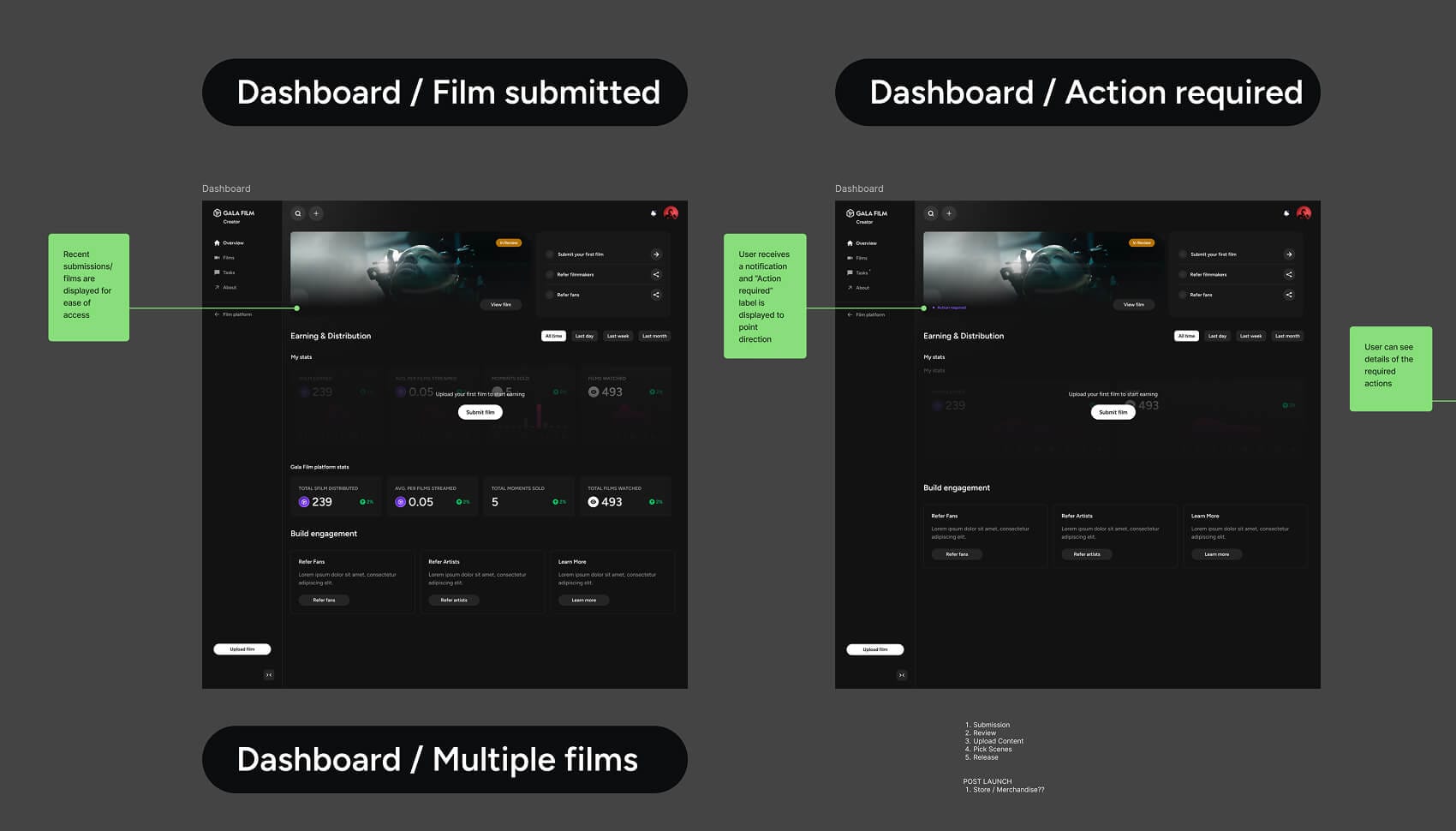
What if creators could skip the middlemen and connect directly with their fans? Gala empowers creators to monetize their work while rewarding fans and offering a more engaging experience.
Objectives & outcomes
Objectives
- Design decentralised entertainment platform accessible to mainstream audiences
- Ship an MVP to validate fan engagement and creator publishing
- Make Web3 infrastructure invisible to end users
- Establish gamification mechanics that drive retention
Outcomes
- Launched MVP across film and music platforms
- Users engaged with blockchain features without encountering Web3 terminology
- Validated collection and reward mechanics with real community feedback
- Creator publishing pipeline reduced from complex multi-step process to self-service workflow
Pioneering AI workflows
" He brought AI workflows into our design-to-dev process in ways that genuinely sped things up. He's creative and sharp, but always grounded in actual constraints, adapting quickly when things shift. He thinks in systems, communicates clearly, and doesn't need hand-holding."
Jonathan Burk
Lead AI Engineer at Gala
Designing for a New Creator Economy
How do you make decentralised technology invisible, and help creators and fans feel at home on a platform where ownership, monetisation, and distribution work completely differently from anything they've used before?
Key contributions
Product designer dedicated to Gala Film, designing the product end-to-end from zero to one with supporting contributions to Gala Music and the broader ecosystem.
- Fan engagement & retention
Designed the discovery, onboarding, and content experience. Introduced gamification mechanics, reward systems, collection progress, and achievement loops, that turned passive viewers and listeners into active, returning participants. - Creator publishing tools
End-to-end pipeline from content upload through tokenisation to storefront launch. Made complex Web3 infrastructure feel like a simple self-service workflow creators could use without blockchain expertise.Fan engagement & retention - Strategy & validation
User journeys, dozens of iterations, interactive prototypes, and direct testing with the community. Worked alongside engineering and leadership to shape what to build, not just how it looks.
Adaptability and independence
"Przemek adapts easily as priorities change, moving fluidly between UX, UI, animation and even front-end work when needed [...] he’s especially good at tackling complex, trust-sensitive problems with very little steer, input or guidance."
Paul Wilsher
Product Owner at Gala
Ship fast, learn, refine
We launched an MVP to validate the core experience, then iterated toward the full vision.
- MVP
80% of the experience, shipped fast to validate the idea with real users. - North Star
Refined and expanded with new features, informed by what we learned.
Web3 without the jargon
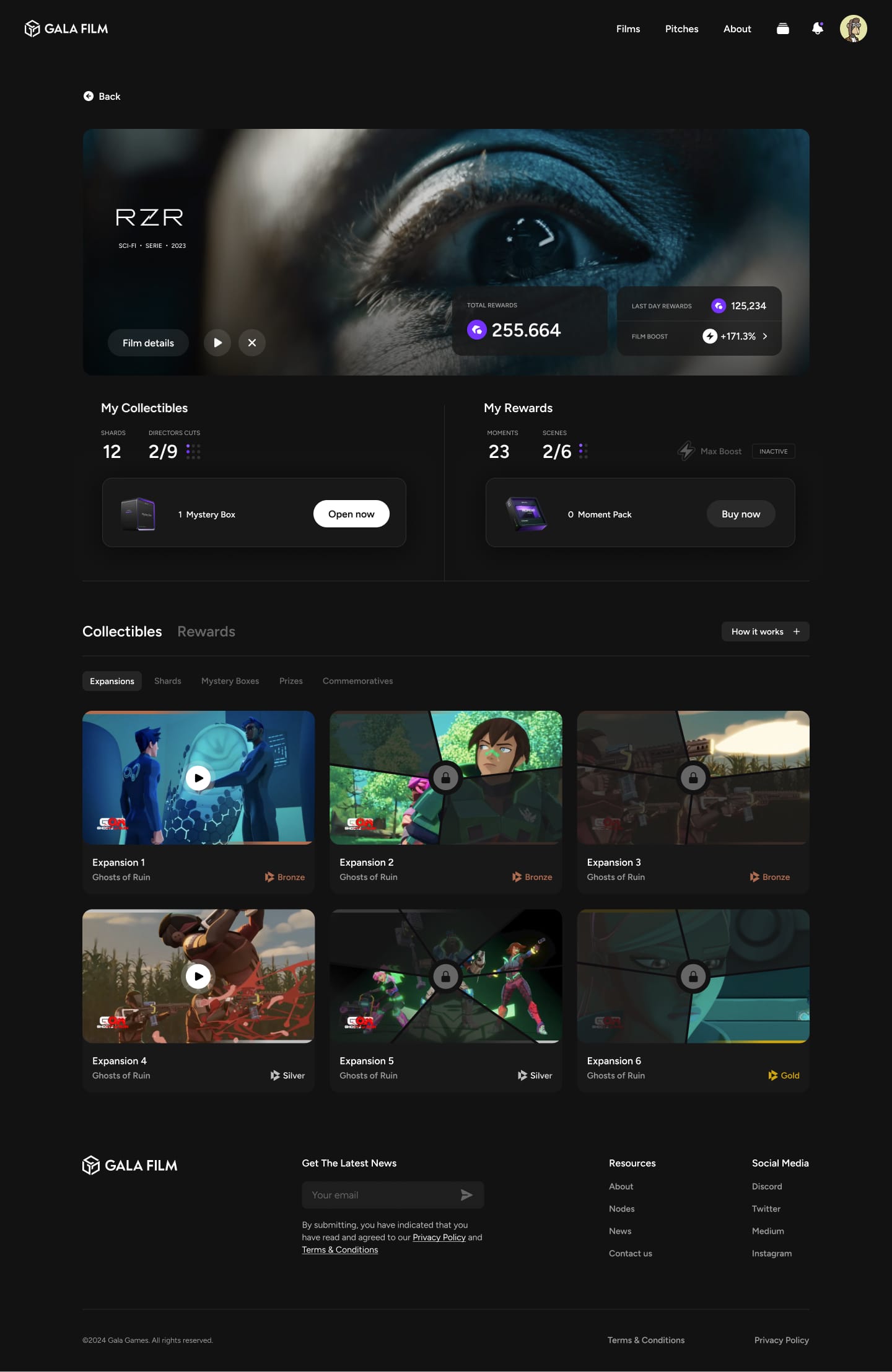
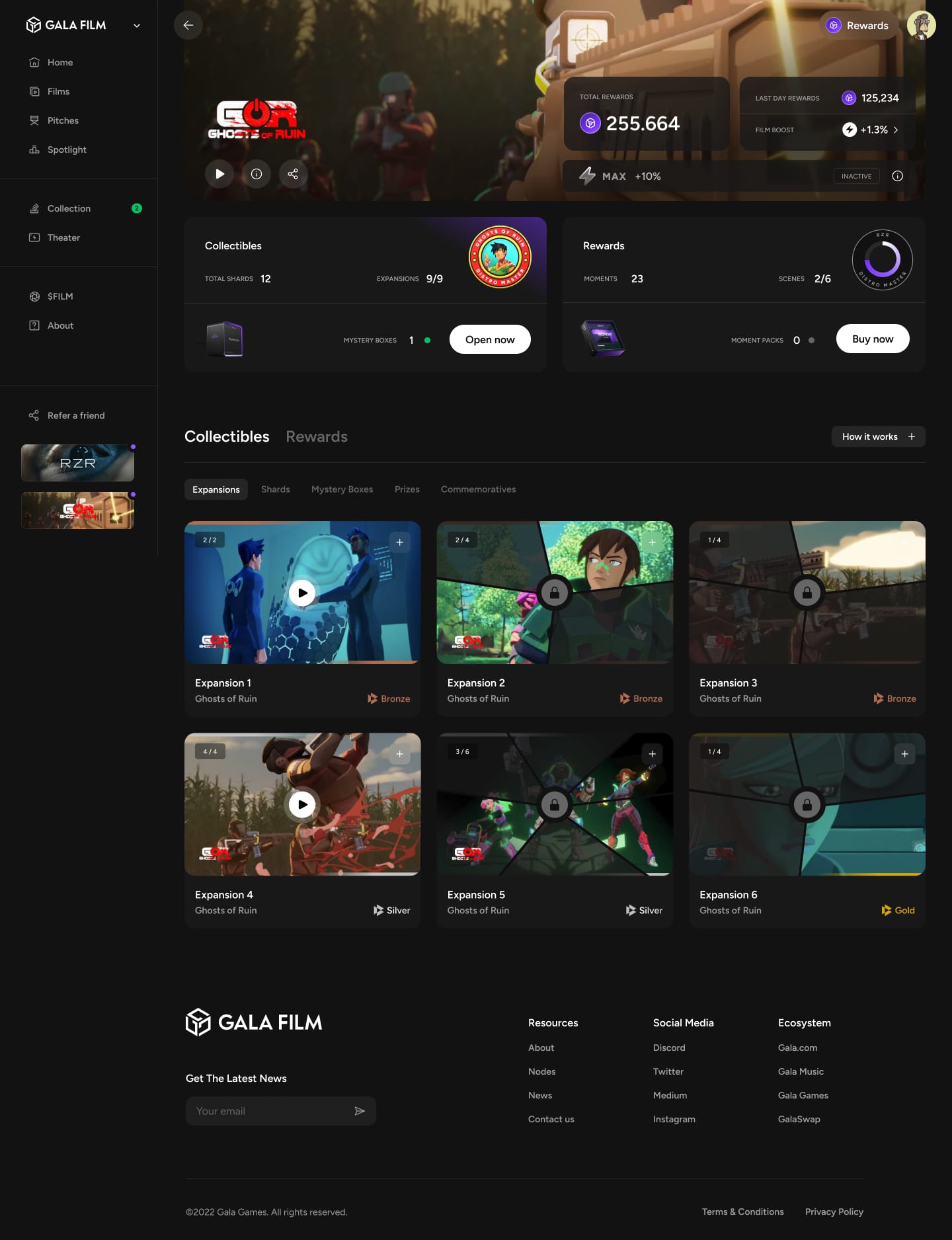
The technology was invisible, the experience was intuitive. Fans just watched, collected, and earned. The infrastructure did its job by staying out of the way.
- Users collected digital items without knowing they were NFTs.
- Users earned rewards without knowing they were tokens.
- We deliberately buried the blockchain terminology
Progressive complexity
The platform serves users at every level of intent from casual watchers to power users. Web3 mechanics power the experience but only surface when users are ready for them.
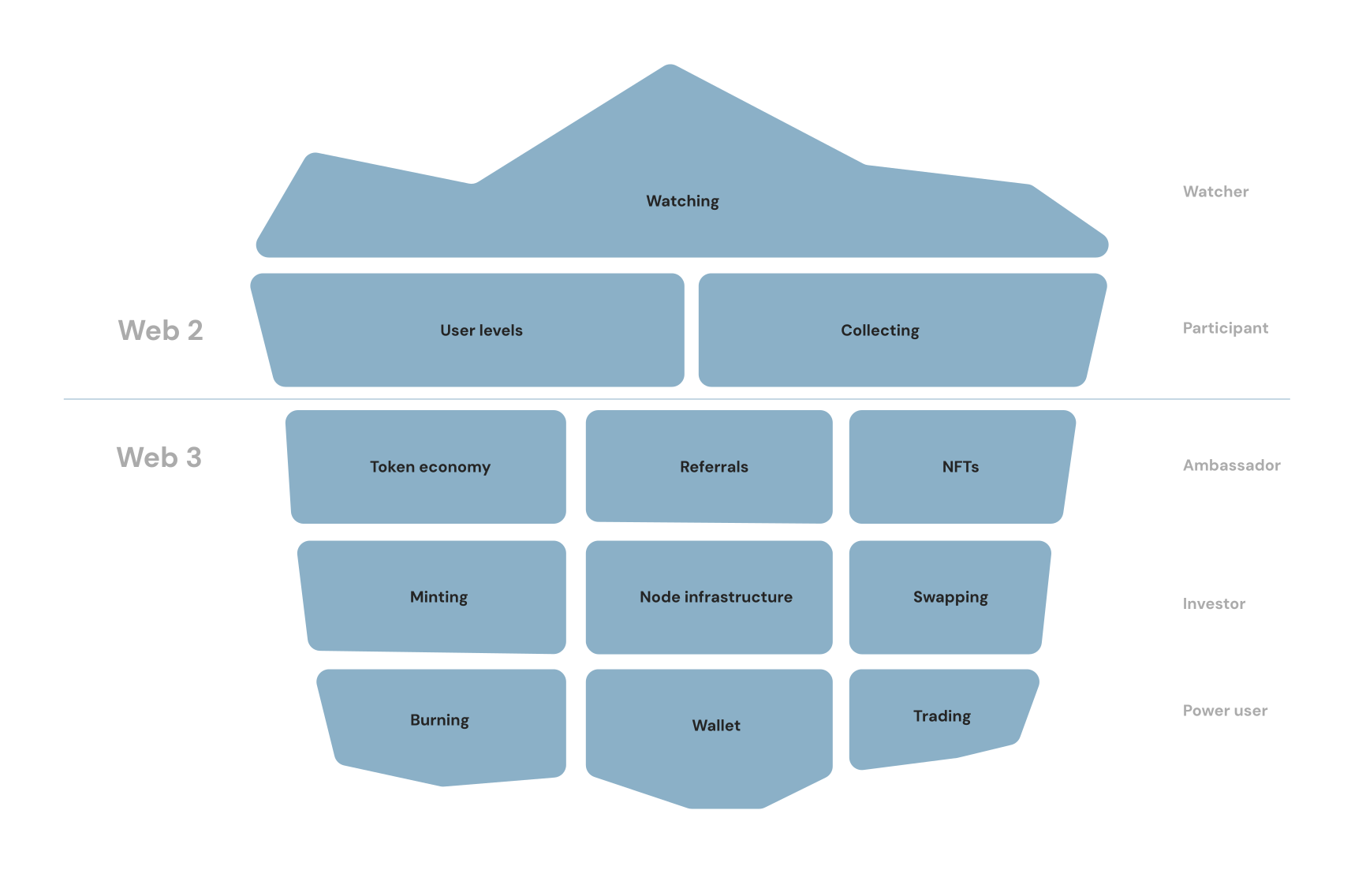
Gamified experience drives engagement and retention
Engagement comes down to psychology. Every mechanic in Gala Film was designed around how people actually behave, the urge to complete a set, the satisfaction of unlocking something rare, the pull of wanting to see what's next. Each system below creates meaningful progression and gives users a reason to come back.
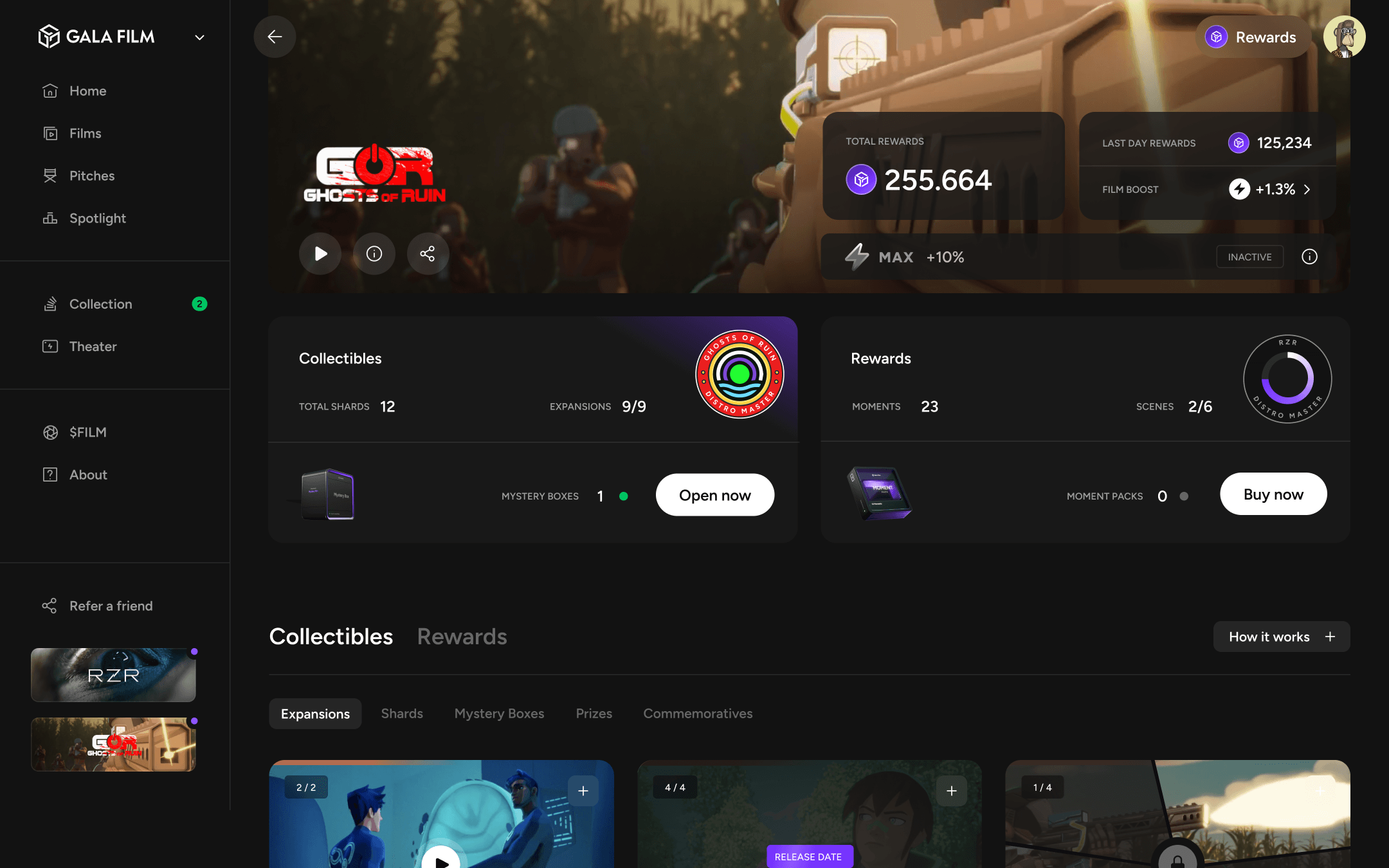
User levels
Progress goes beyond collecting. Users level up through platform activity, watching, collecting, referring, participating. Each level unlocks new perks, boosts, and access. Casual viewers get a reason to go deeper, power users get a visible sign of their dedication.
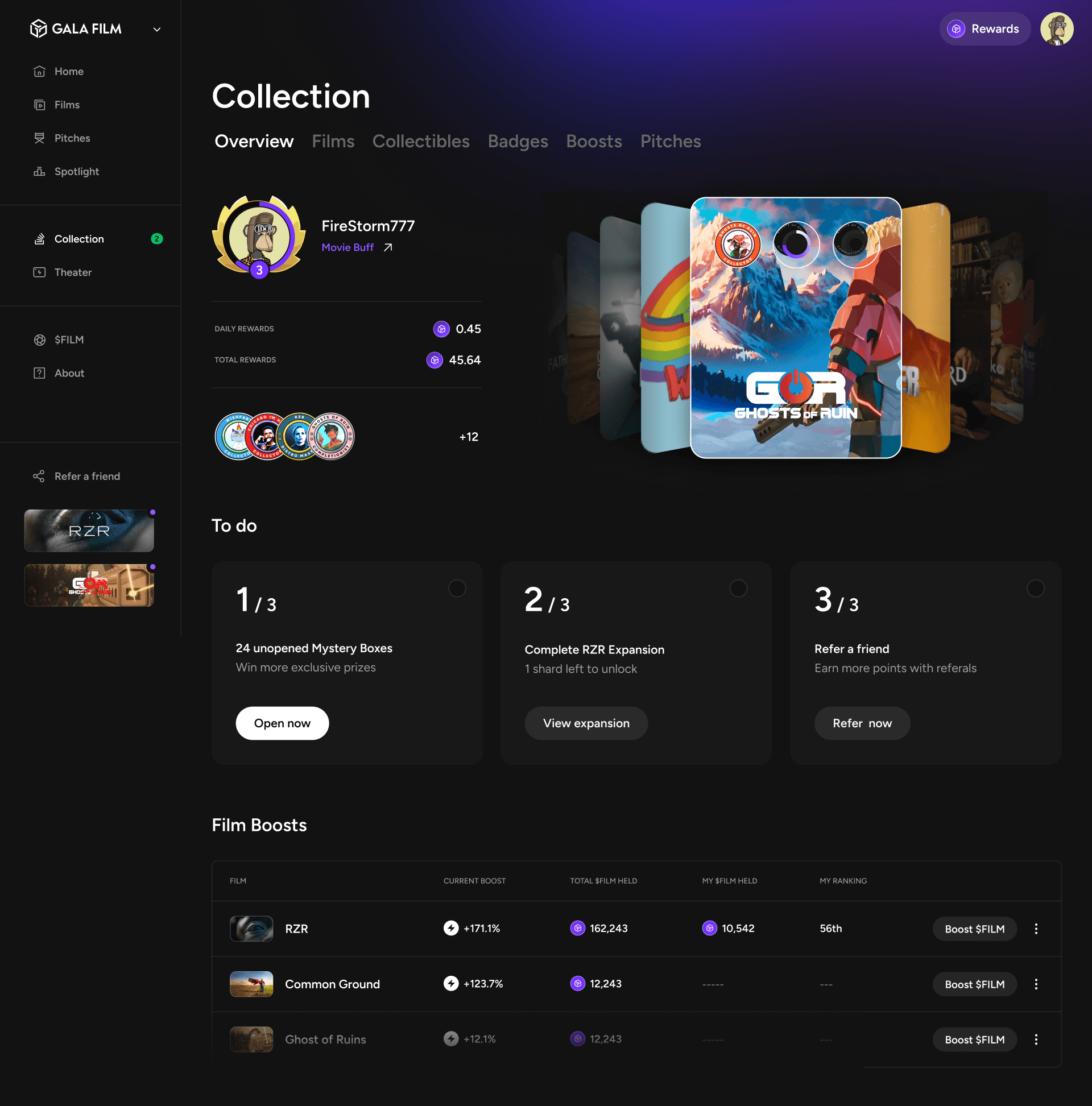
Achievments and badges
Achievement markers collected across the platform per film, per event, per milestone. Some come from completing Scenes, others from unlocking full expansions, special editions, or limited-time events. Badges act as the visual memory of everything a user has done on Gala Film.
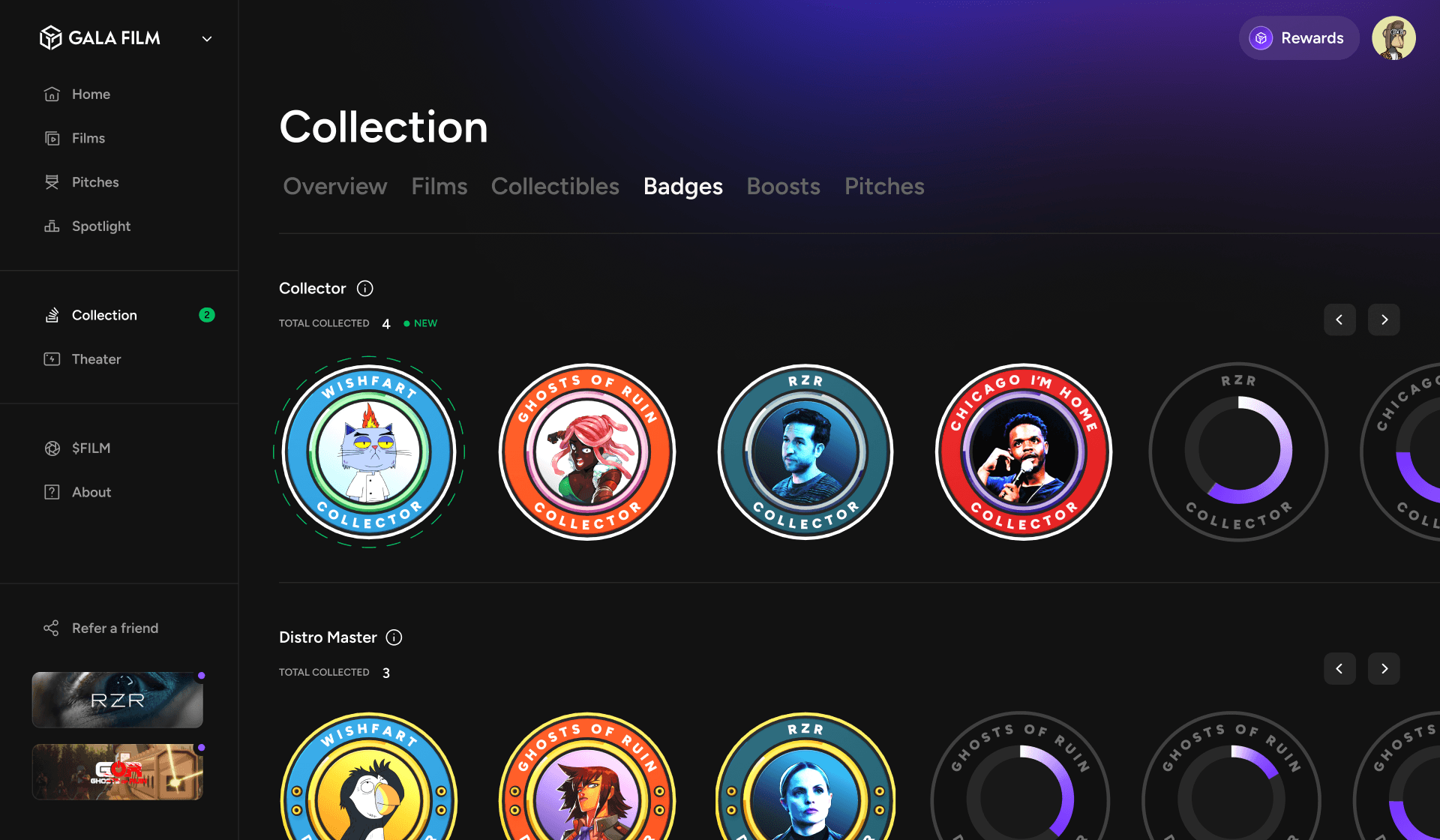
Expansions
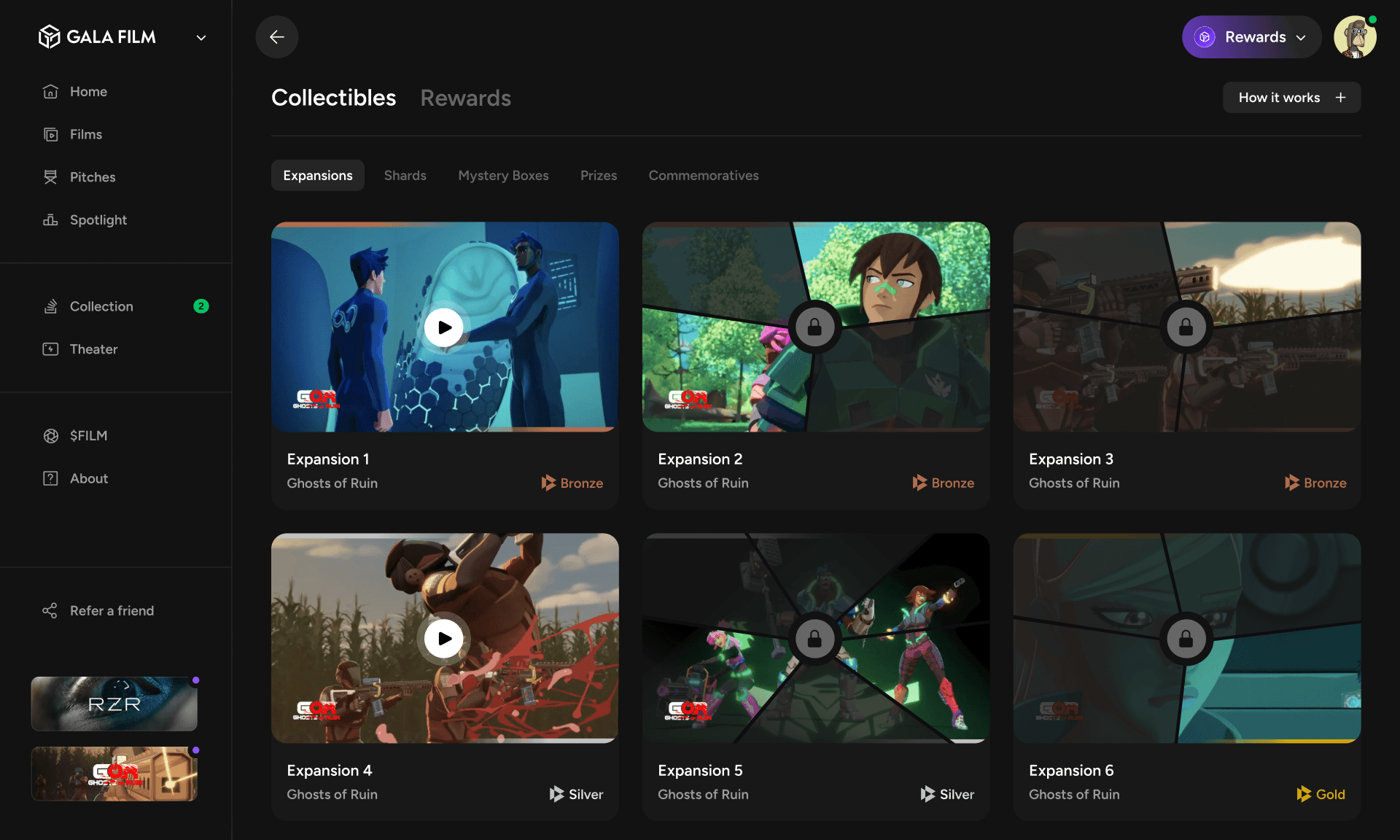
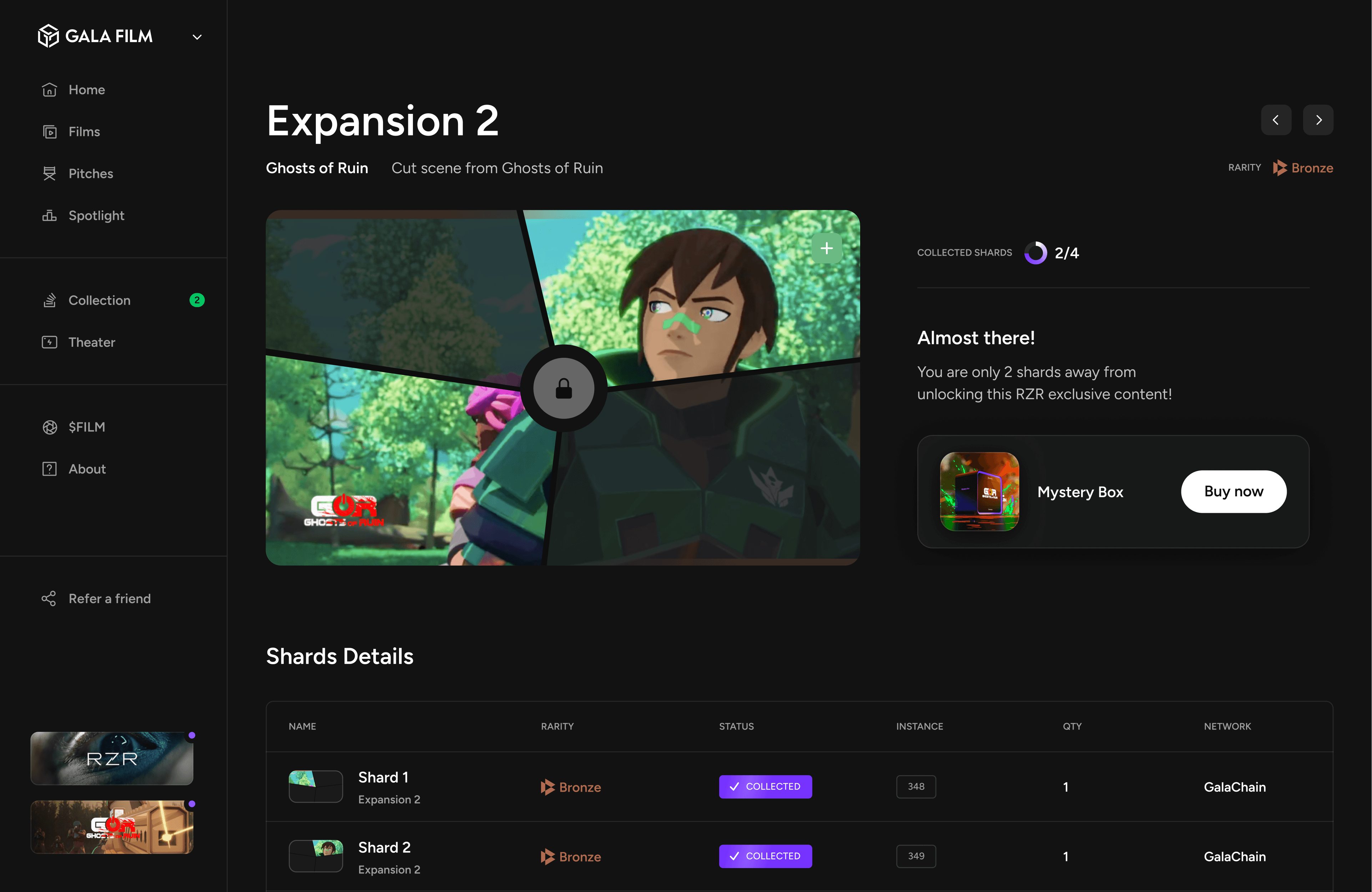
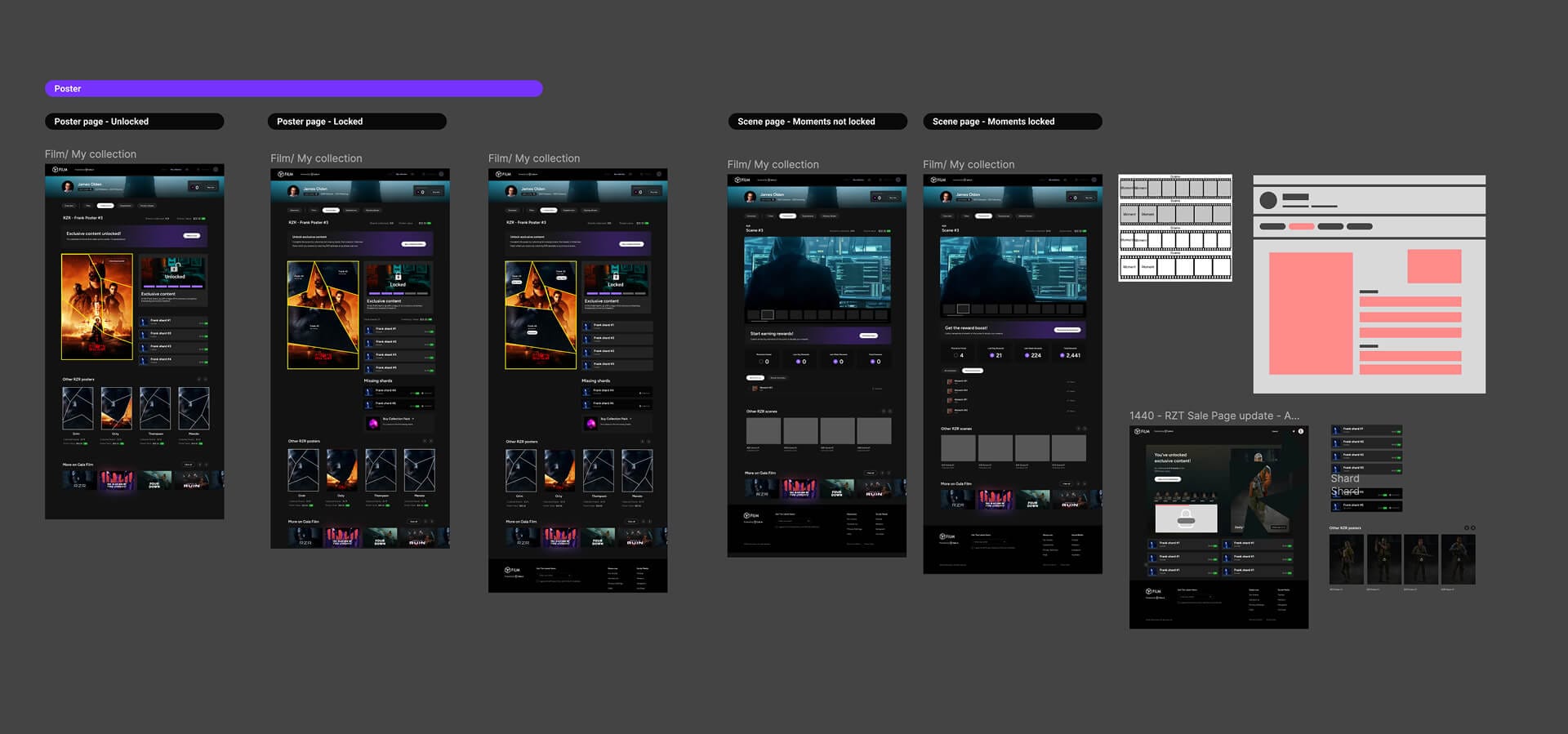
I designed Expansions as a completion loop users collect shards across the platform, piecing together unlockable content layers. Turning passive viewing into a puzzle gave users a reason to keep coming back. The closer they got to completing a set, the harder it was to stop.
Scenes
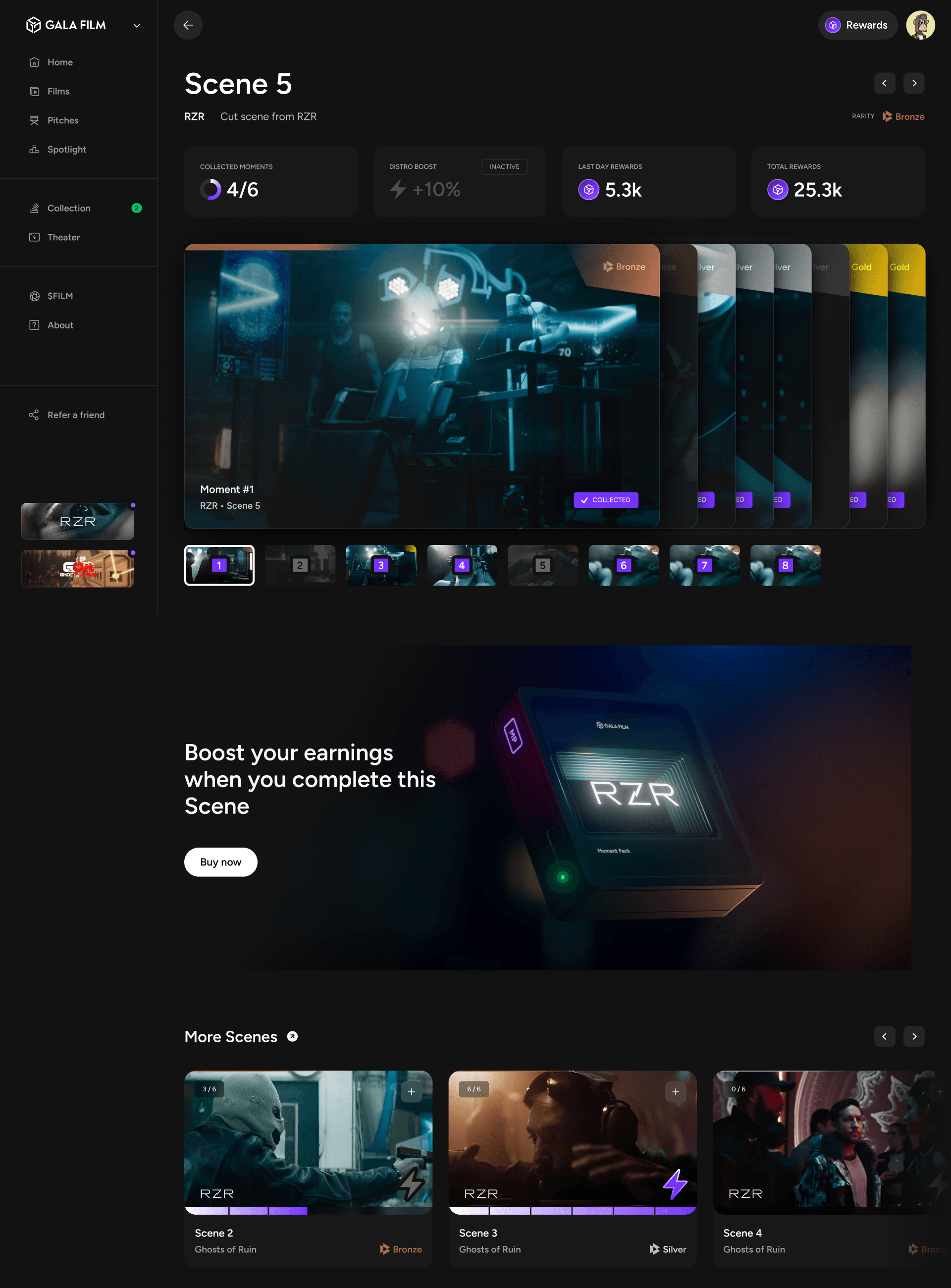
Imagine owning an NFT of an iconic film moment. That's what Scenes and Moments are short clips users can collect and own. Limited, some more rare than others.
I shaped the design and mechanics, and contributed to the strategy behind the ownership model holding Moments earned users a share of the film's reward pool, rewarding collection over speculation. Completing a full Scene or film multiplied rewards. Fan ownership became fan income.
Mystery Boxes
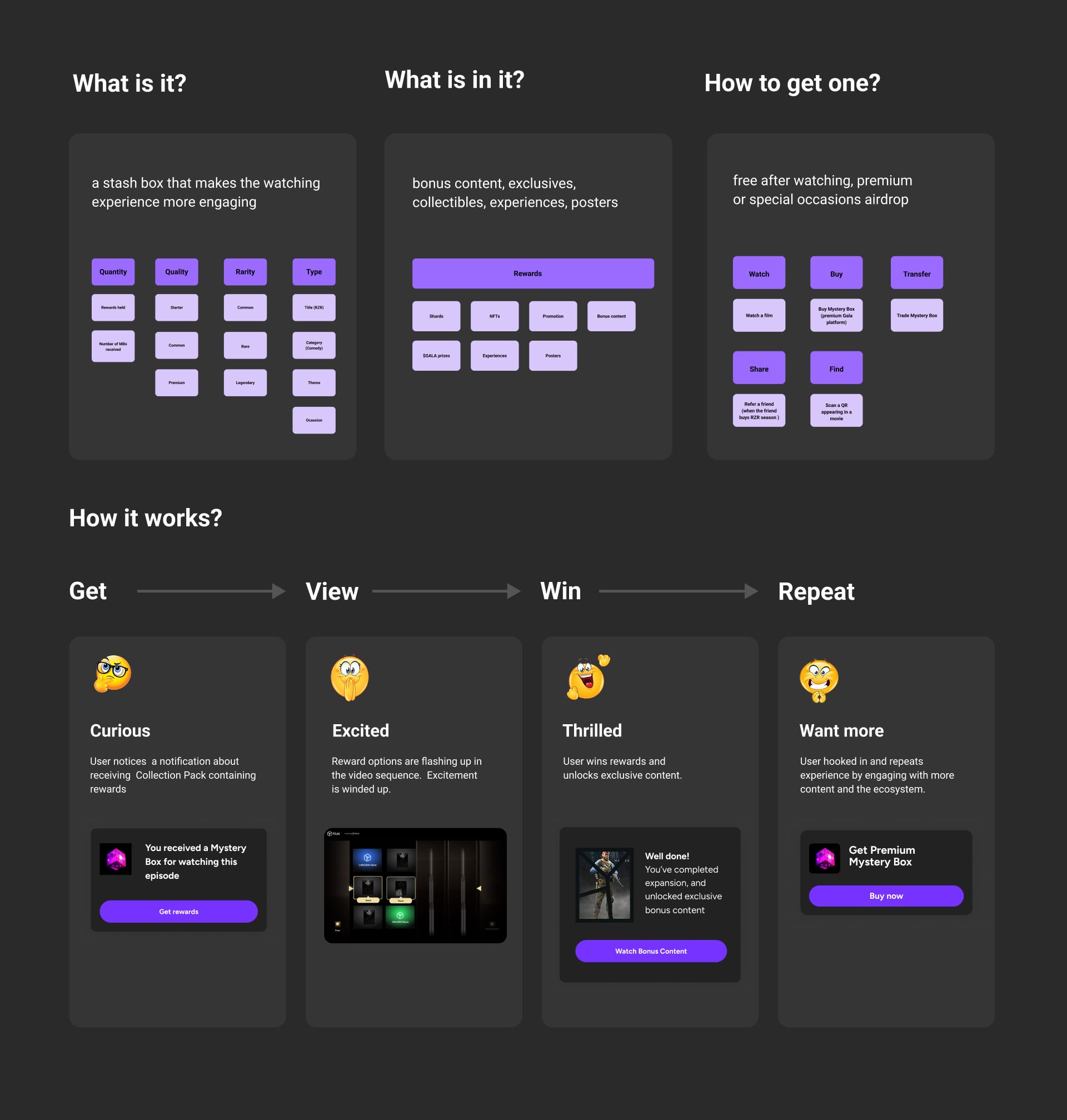
Knowledge of psychology came in handy when I was designing Mystery Boxes around the gacha mechanic open, reveal, react. Each box contained shards, rare Moments, and surprise prizes. I treated the anticipation of the reveal as part of the reward itself, designing the interaction to feel like opening a pack of trading cards.
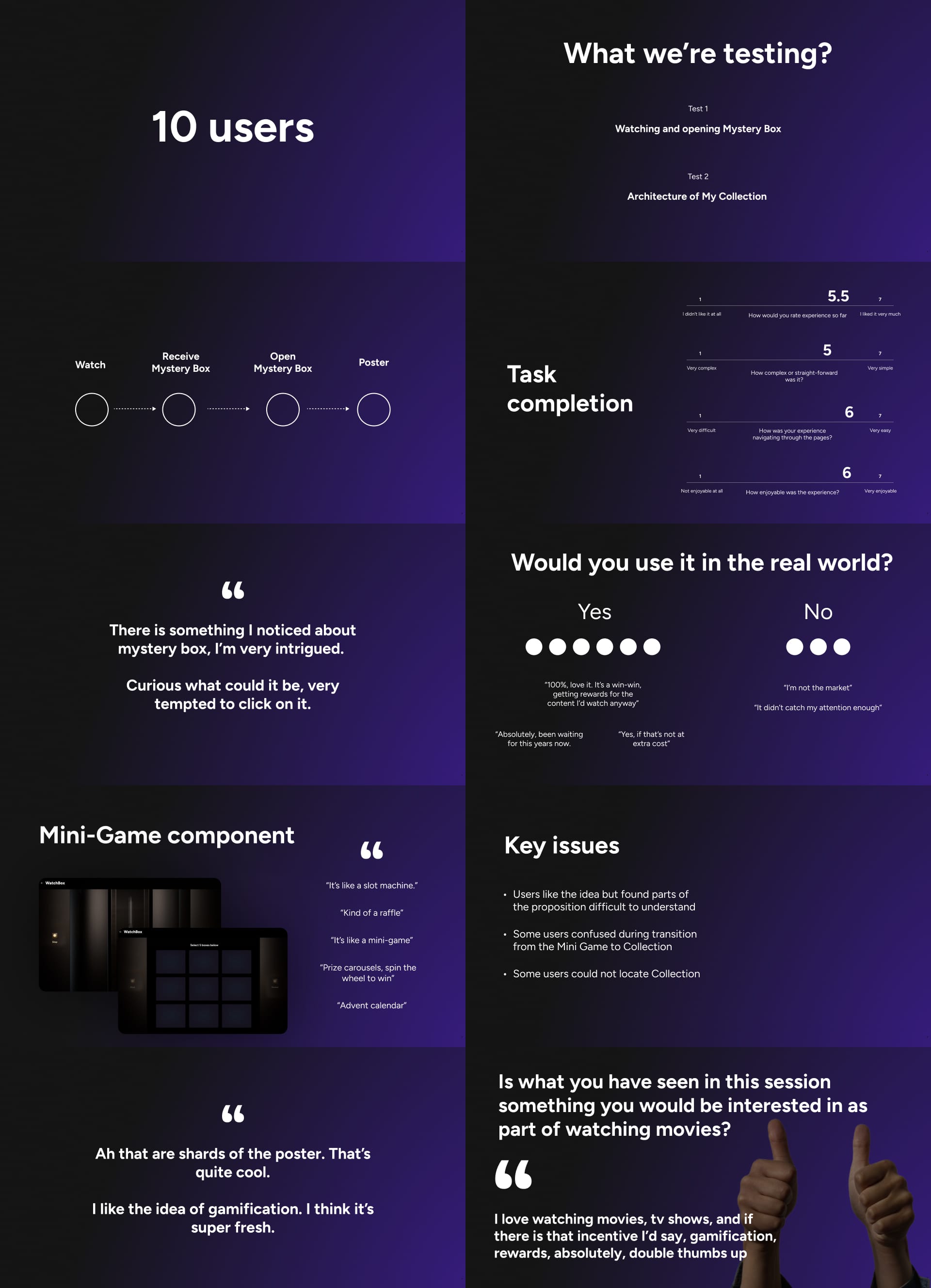
Mystery Box User Testing
I tested the Mystery Box flow with 10 users across watching and collection journeys. The mini-game mechanic resonated strongest, users described it as "a slot machine," "a mini-game," "prize carousels." 7 out of 10 said they'd use it in the real world. Key insight: users wanted clearer transitions between the mini-game and their Collection. Those findings shaped the next round of design.
Mystery Box experience MVP
The shipped version. Built to validate the core loop (receive, open, reveal, collect) with minimal friction. Watch the flow in the video above.
Self-service publishing
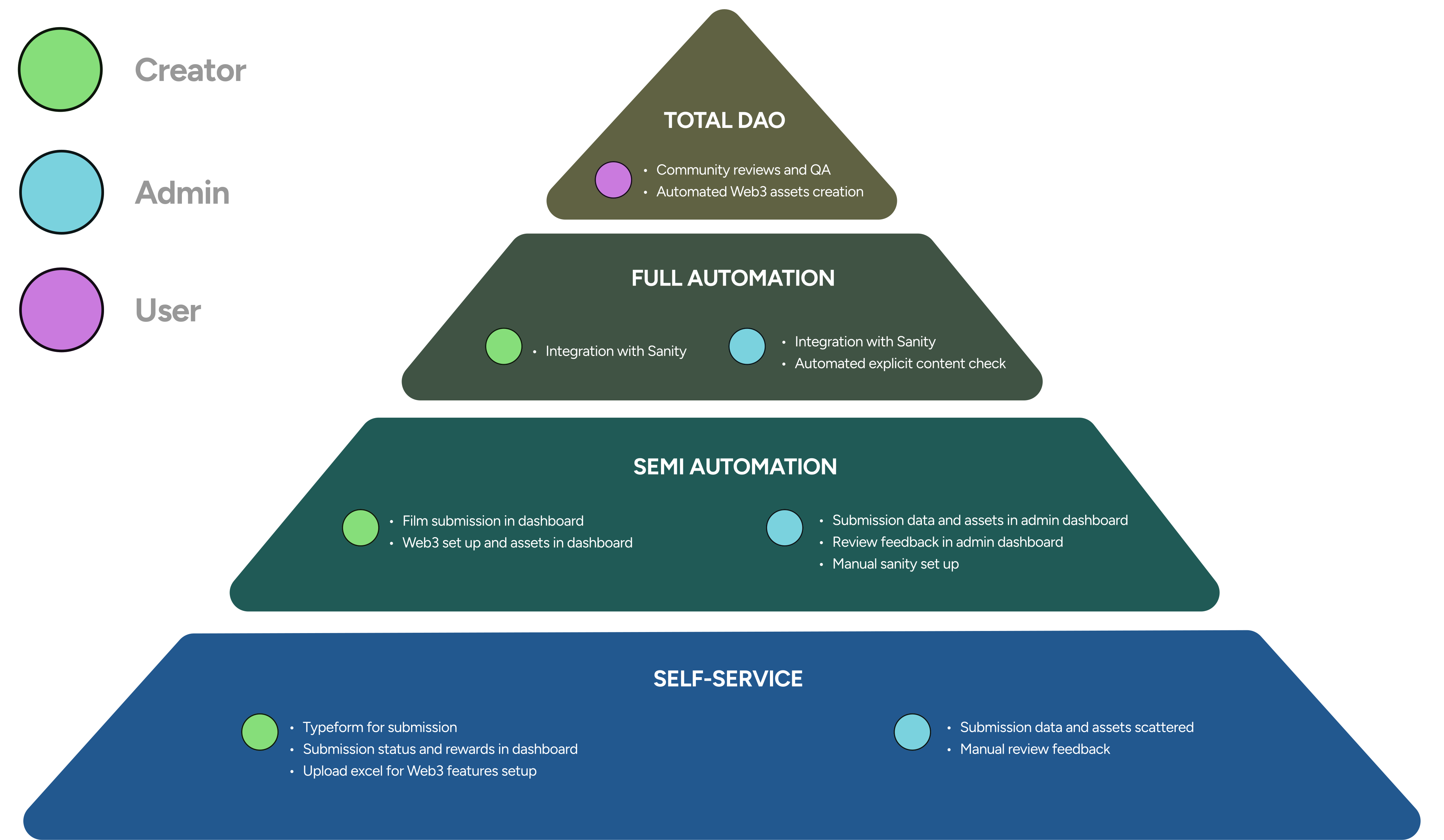
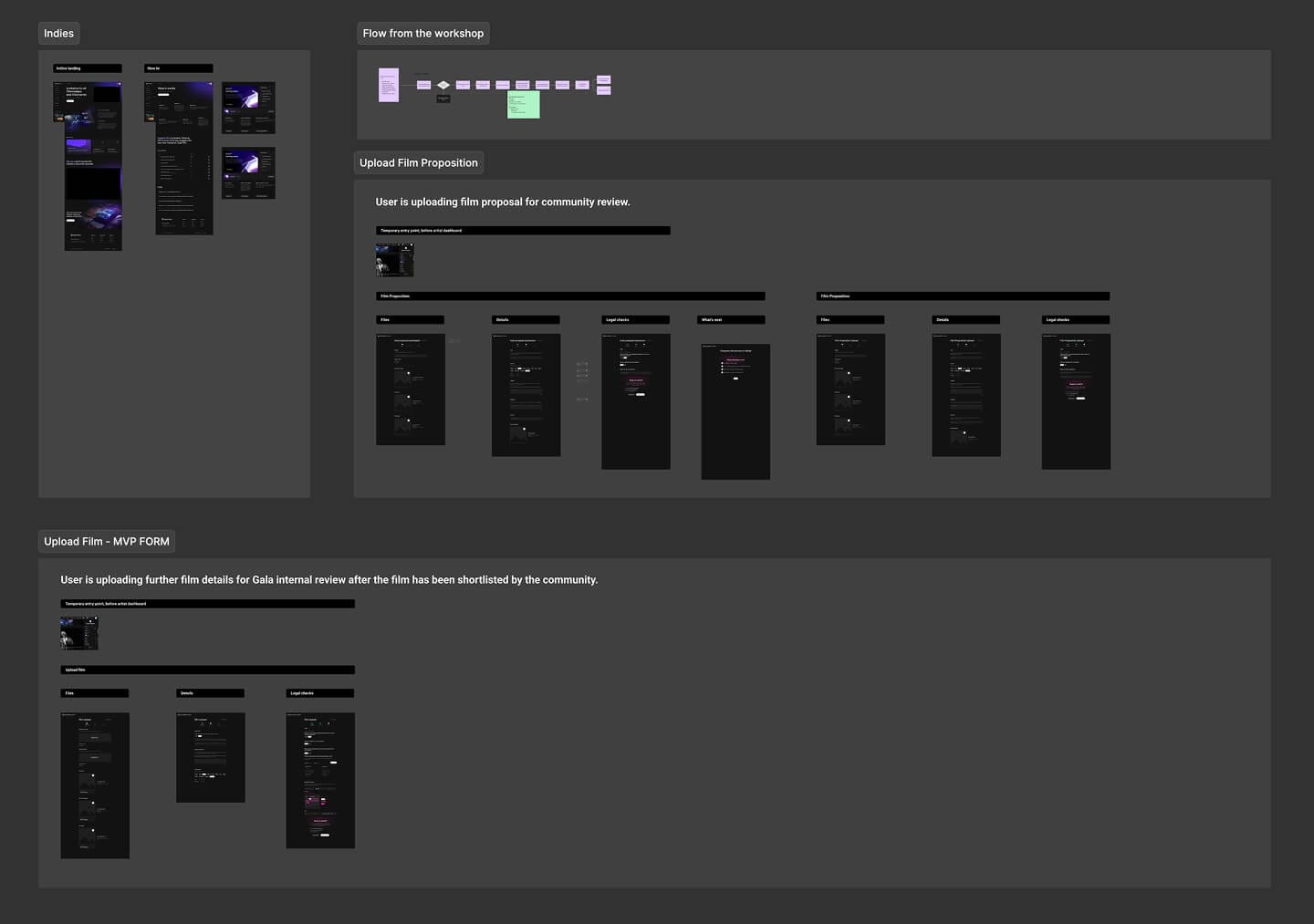
I designed the creator pipeline was designed in layers. Every decision had to work within what could be built first, while leaving room to automate upward without rebuilding from scratch. Start simple, ship it, then let the layers above it reduce the manual work gradually.
Full scope
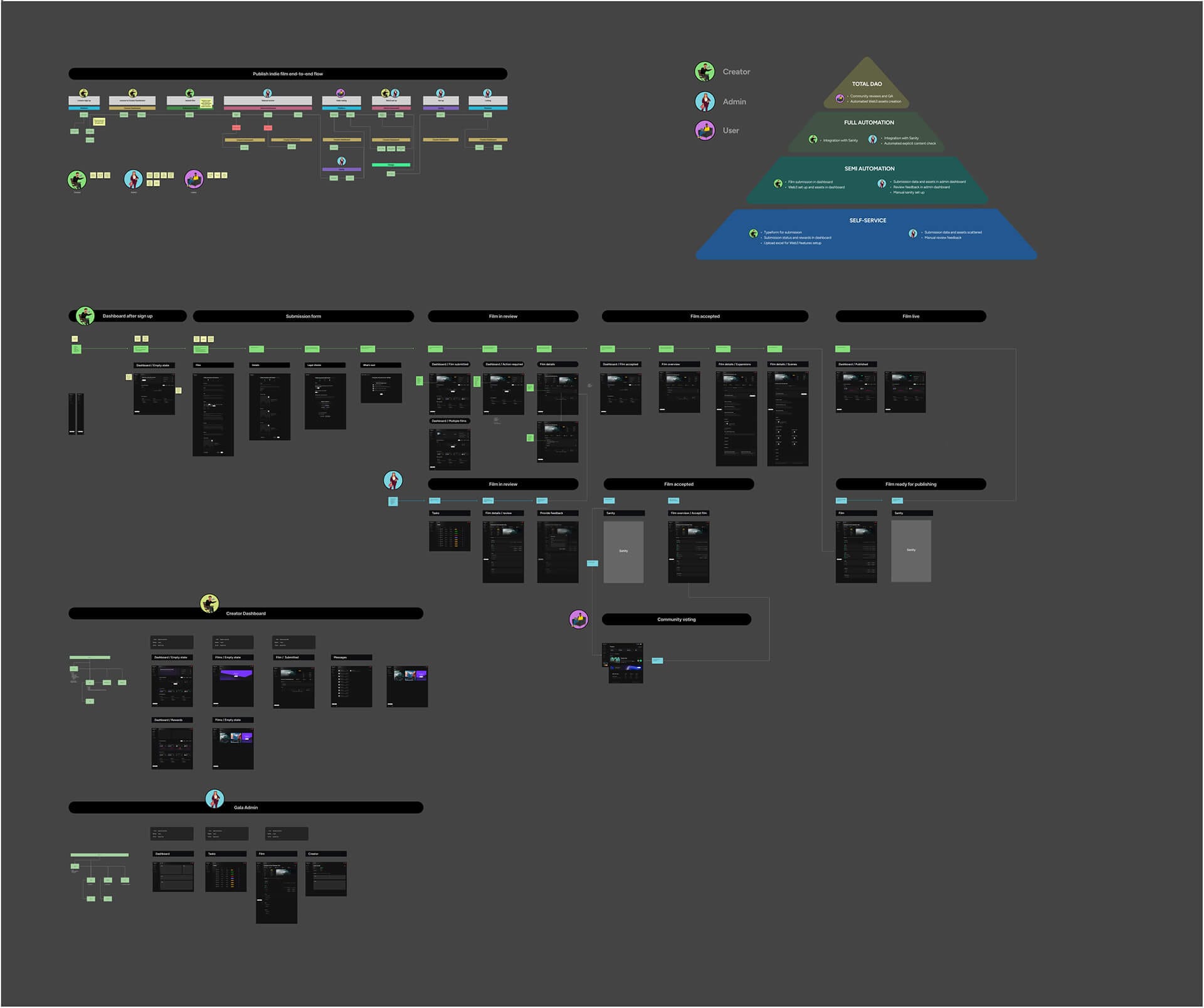
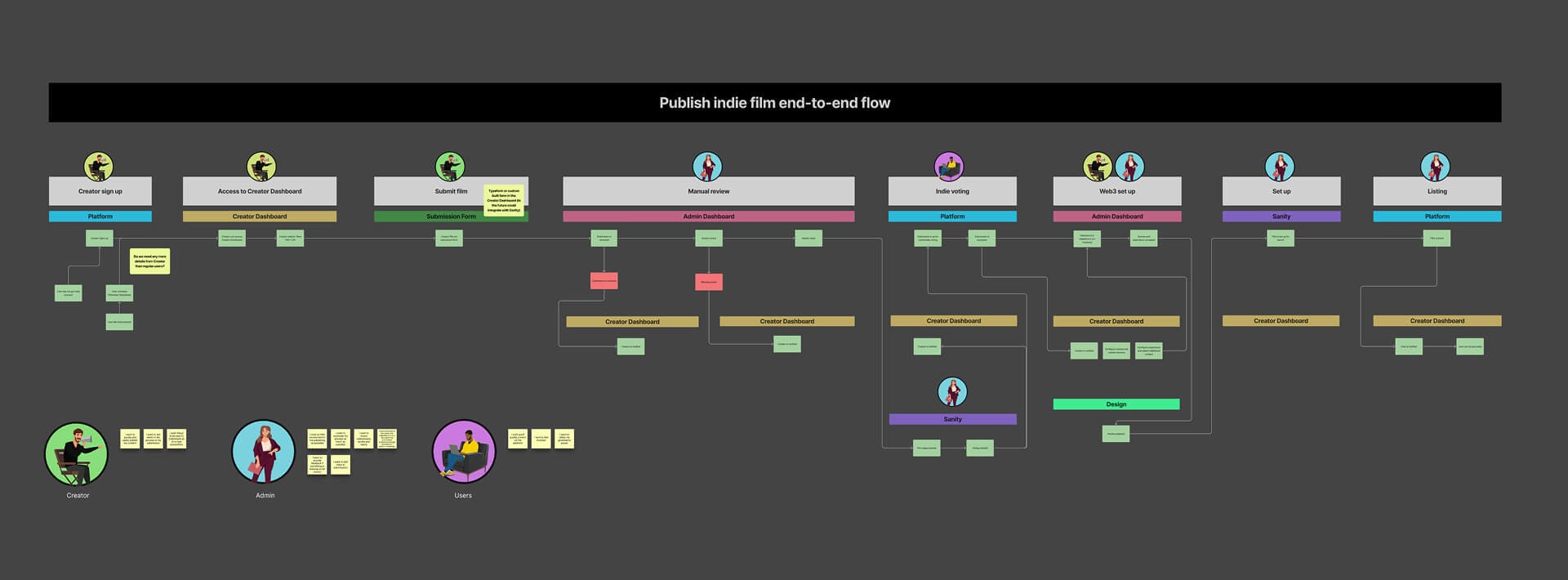
The end-to-end flow mapped every touchpoint across three user types, Creator, Admin, and User, from sign-up through to a film going live on the platform. Eight stages, multiple dashboards, community voting, Web3 setup, Sanity integration. Each stage had its own screens, its own decision points, its own handoffs between actors. Mapping it all in one place made the complexity visible — and made it possible to design each piece knowing exactly where it sat in the larger journey.
MVP
The MVP started with Typeform, a deliberate choice to get the pipeline moving before investing in a custom build. The process was fully manual at this stage, and intentionally so. It was the first step toward full self-service, a way to validate what creators actually needed before committing to building it.
Dozens of iterations of rejected iterations
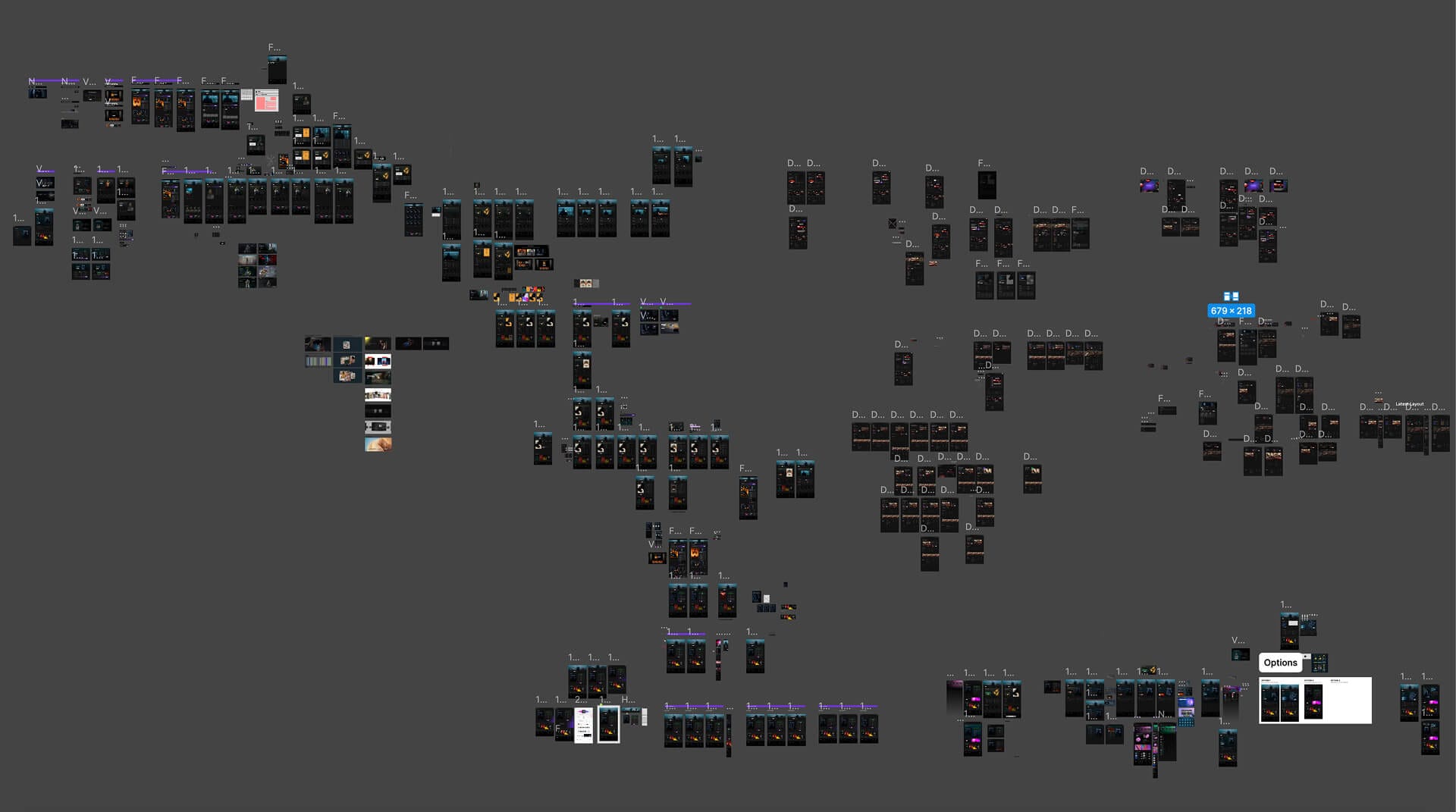
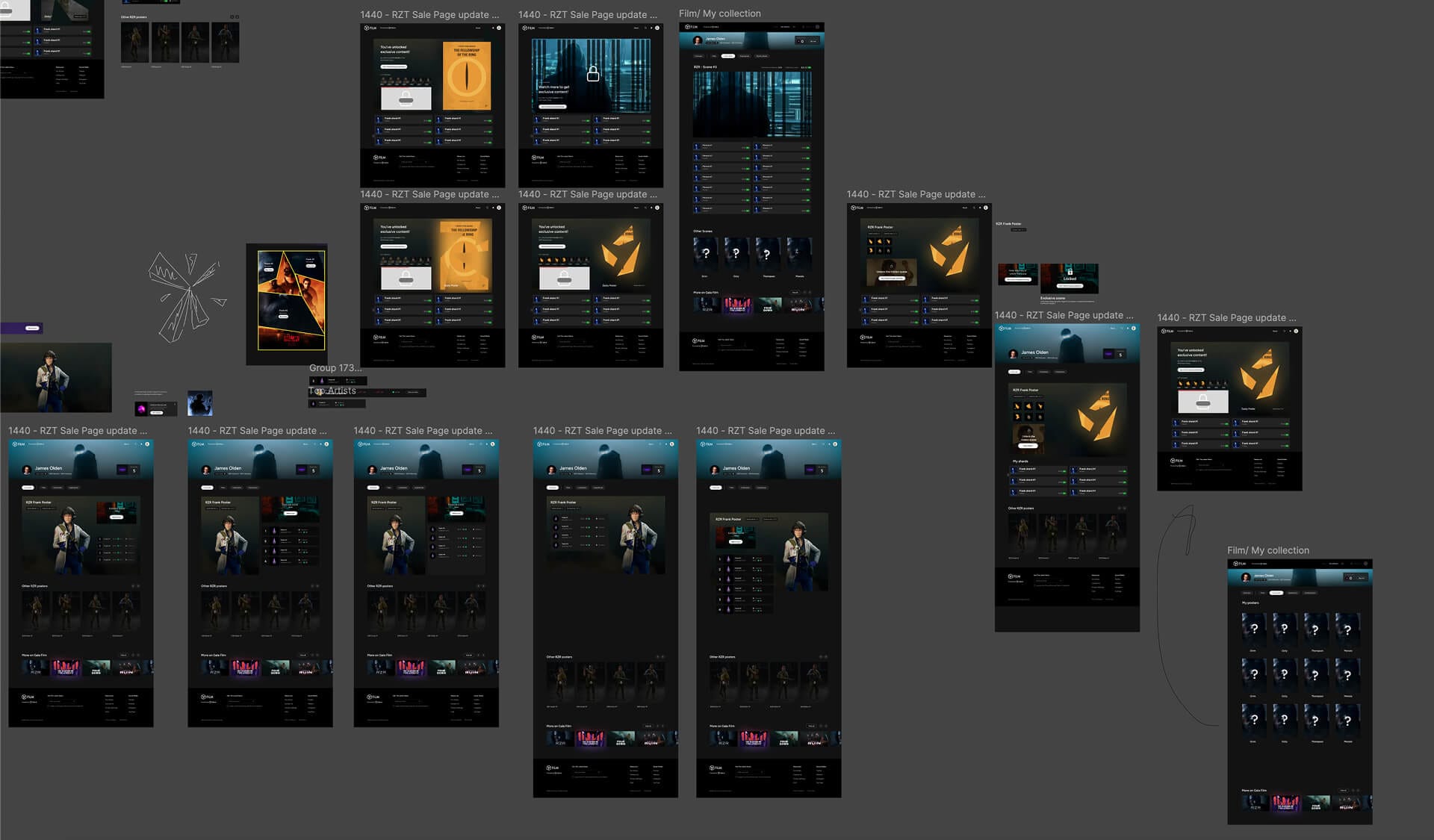
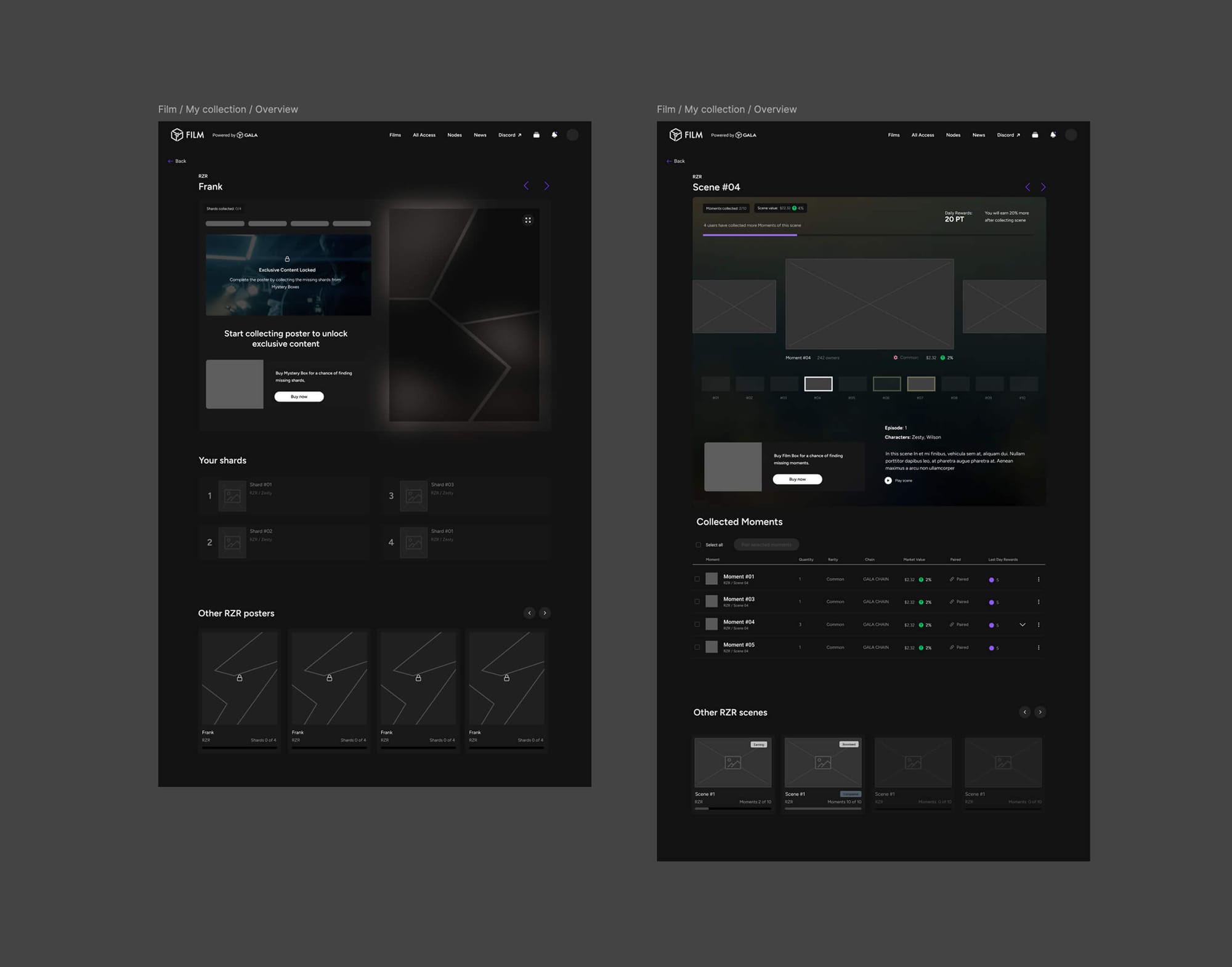
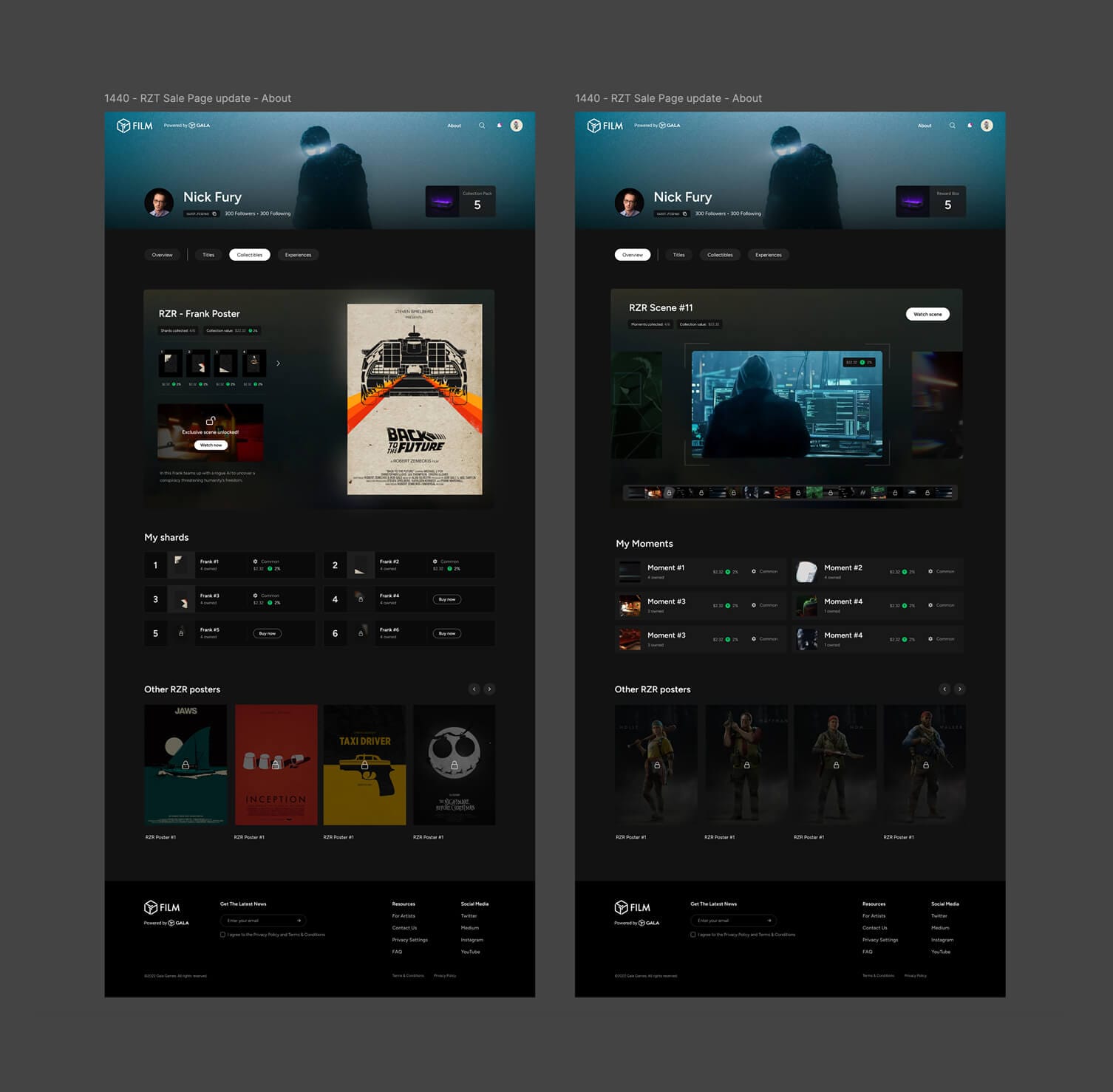
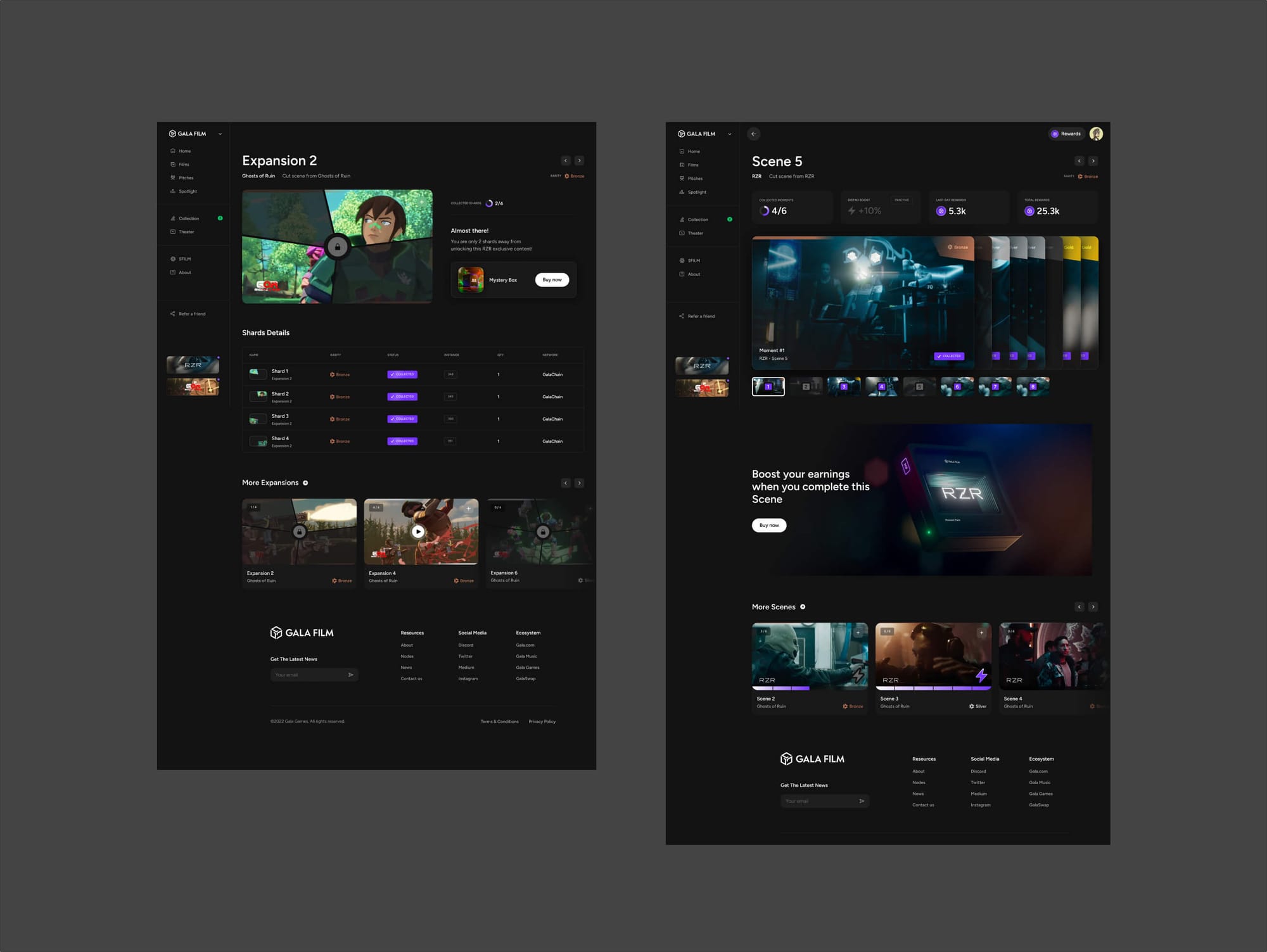
Every screen went through multiple rounds, sketches, wireframes, prototypes, tested with users, refined, shipped, refined again. Iteration wasn't a phase, it was the default mode. Showing the two versions below isn't to prove progress for its own sake, but to show how consistent testing and listening shaped every decision.
Platform Architecture
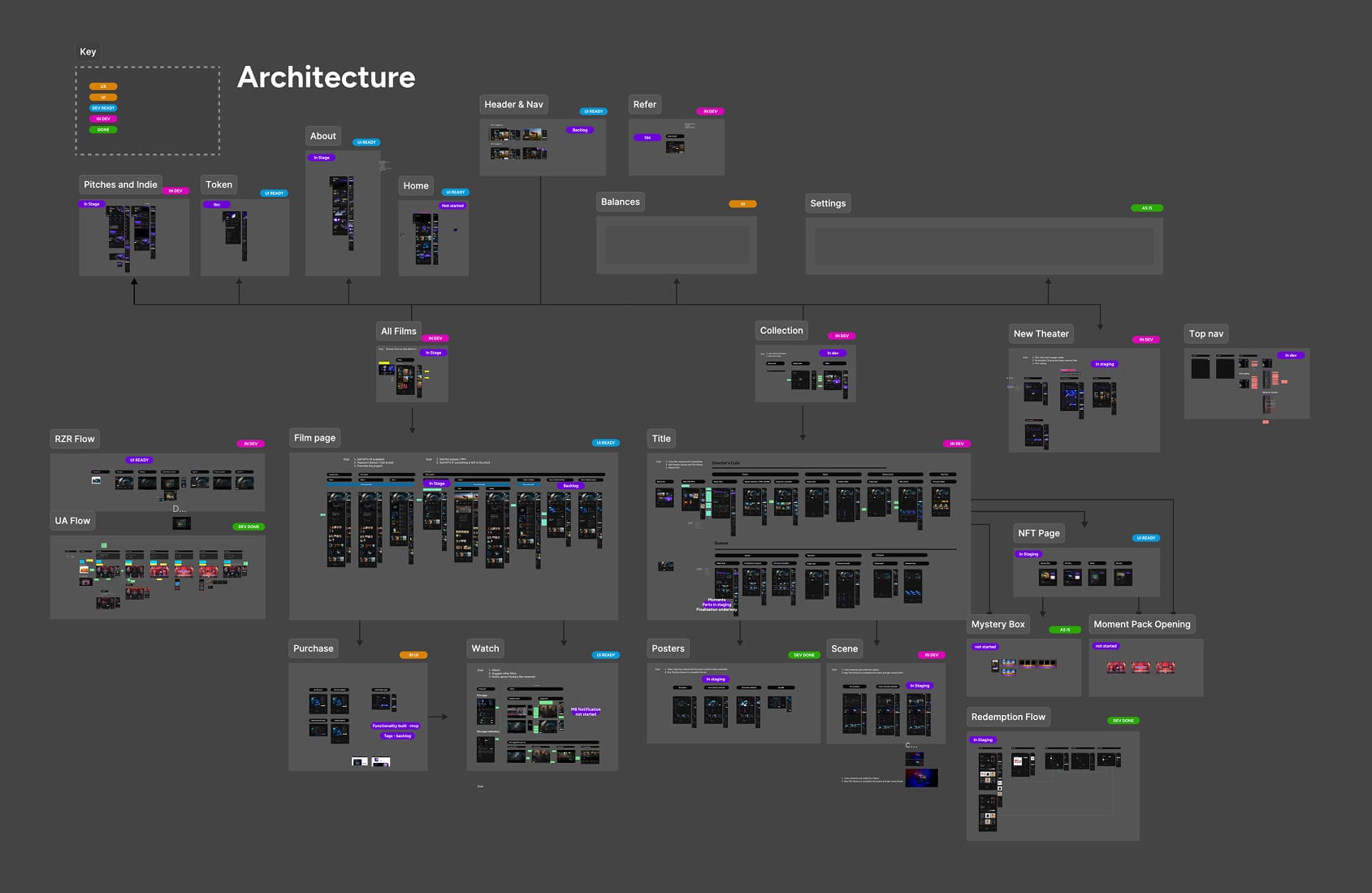
I mapped the full product surface, 15+ interconnected flows from onboarding to collection management to creator tools. I built and maintained a live architecture map shared across design, engineering, and product, which became the team's shared reference for what existed, what was shipping, and what was next.
Key learnings
- Designing for something that doesn't exist yet is humbling
Every decision was a bet, and the best ones came from continous challenging of assumptions and being open to learning and iterating. - Every iteration makes the previous look poor
Looking back at iterations from a month ago you wonder what you were thinking. That's how you know you're making progress. - Constraints beat roadmaps
The MVP taught us more in weeks than months of planning would have. Ship small, learn fast, refine.
Shipping code, not just mock-ups
"He contributed directly to our repos, shipping production front-end code alongside the engineering team. He brought AI workflows into our design-to-dev process in ways that genuinely sped things up"
Jonathan Burk
Lead Engineer at Gala